
Last updated November 17, 2026
 Hardwood
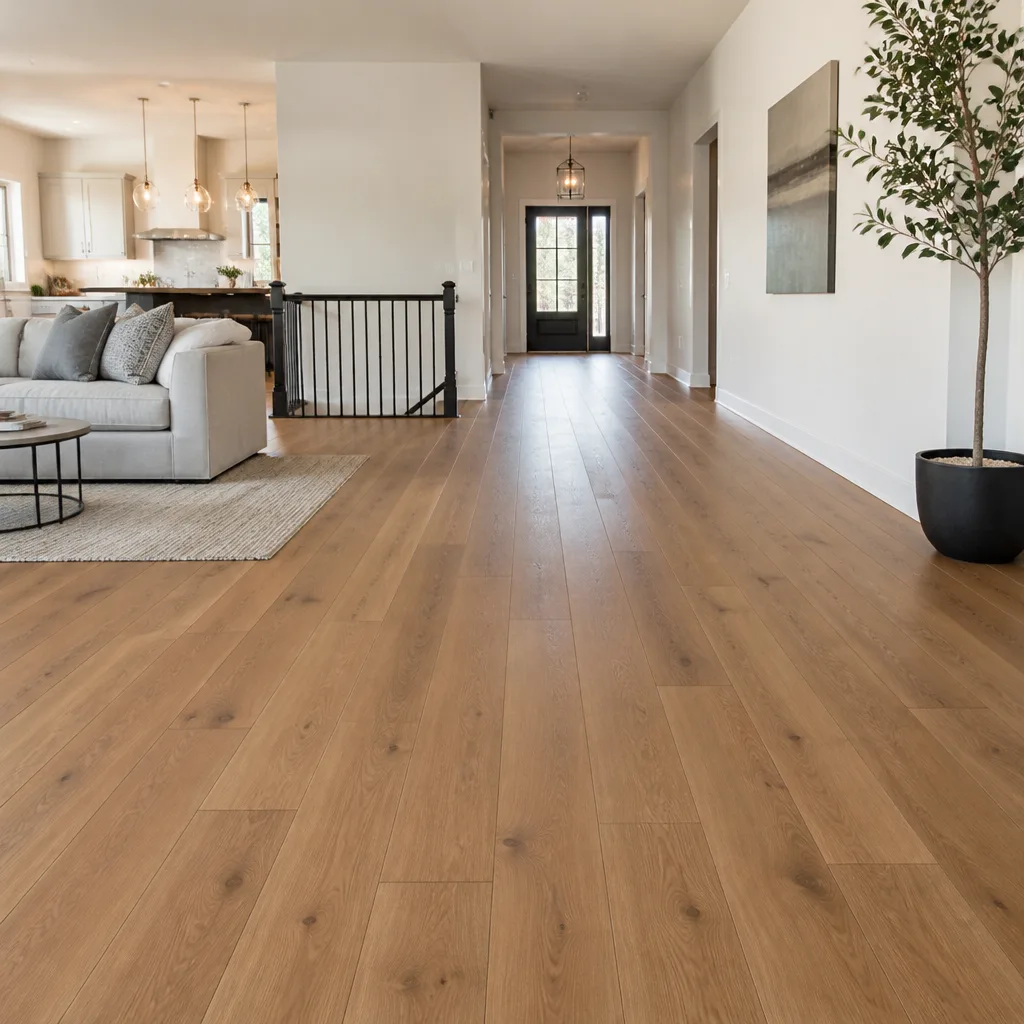 Engineered hardwood
 Luxury vinyl plank
 Laminate
 Porcelain tile
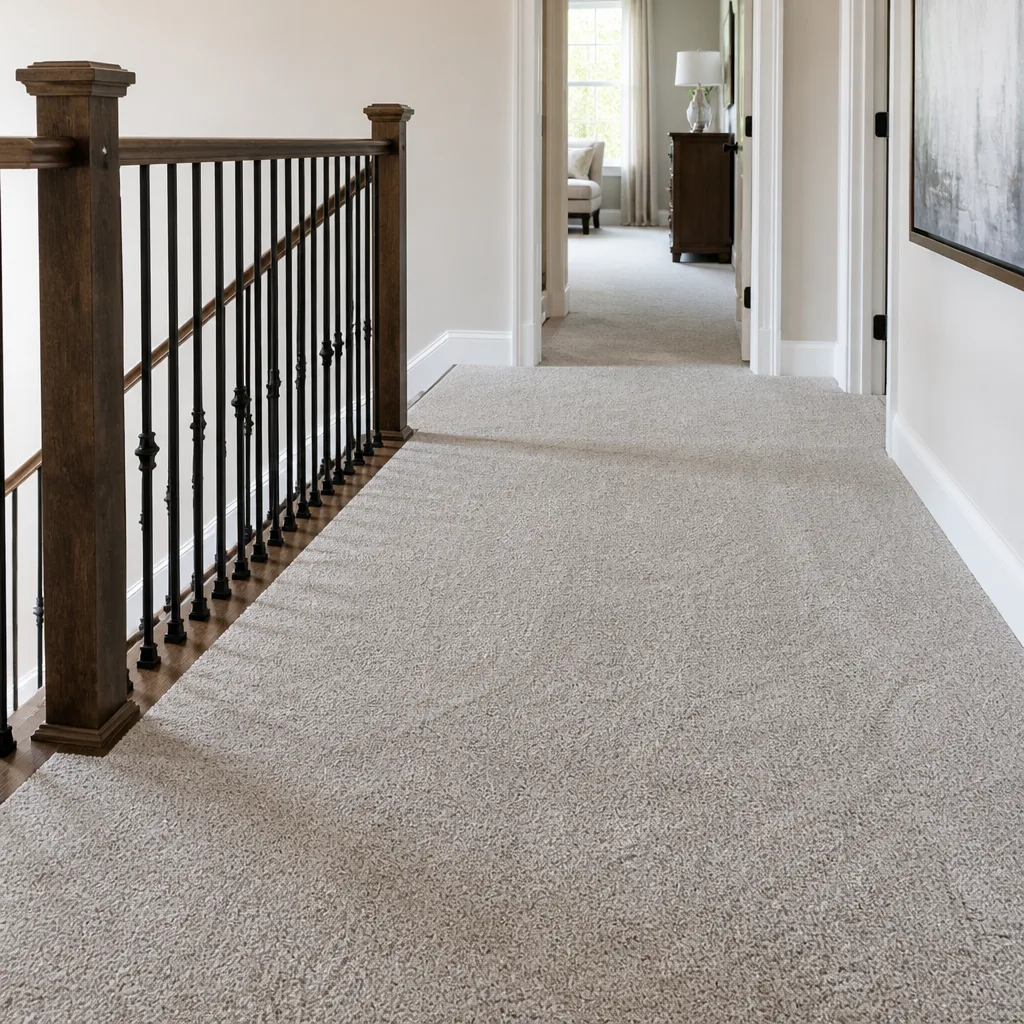 Carpet
 Shaw
 Mohawk
 COREtec
 Pergo
Free in-home measure and written estimate: Shaw, Mohawk, COREtec and Pergo lines compared on your own rooms, with carpet, tile, vinyl plank, laminate and hardwood laid out side by side
Get your free estimateFix It or Start Over: Flooring Repair vs Replacement
A lot of flooring gets replaced that could have been repaired, and a lot gets patched that should have come out. The reason isn’t dishonesty or bad luck most of the time. It’s that the decision gets made from how the floor looks instead of from what’s happening underneath it. A damaged section can look enormous from above and turn out to be a shallow surface problem once someone actually lifts a plank and checks the subfloor. In this guide we’ll walk through the checks that should happen before anyone quotes you a number, which damage patterns mean repair and which mean the floor is telling you something worse is going on, and where the real cost line sits between fixing and replacing. We do this work in Sunrise Manor every week, and the honest answer is different for every floor.
Quick Answer
Flooring repair usually makes sense when the damage is isolated, the subfloor underneath is dry and sound, and the product is still available or can be matched. Full replacement is the smarter call when damage is widespread, moisture has reached the subfloor, the material is discontinued, or the floor is near the end of its usable life. The only way to know which side you’re on is to inspect the subfloor and measure how much of the floor is genuinely affected, before anyone hands you a price.
Styles & brands we work with
- Hardwood
- Engineered hardwood
- Luxury vinyl plank
- Laminate
- Porcelain tile
- Carpet
- Shaw
- Mohawk
- COREtec
- Pergo
Table of Contents
- Check the Subfloor First, Always
- What Each Damage Pattern Is Telling You
- The Matching Problem With Discontinued Floors
- The Real Cost Threshold Between Repair and Replacement
- How Hardwood Refinishing Economics Work in Nevada’s Climate
- Step-by-Step: The Inspection We Run Before Any Estimate
- Repair vs Replace: A Side-by-Side Comparison
- When Replacement Is Simply the Right Answer
Check the Subfloor First, Always
No honest repair-or-replace conversation can happen until someone has looked under the surface. The subfloor is the structure the finished floor rests on, and it decides everything. A dry, solid subfloor under a badly stained or buckled surface is often a repair job. A subfloor that’s soft, swollen, or holding moisture under flooring that looks fine is a replacement job that’s being postponed.
Here’s what a proper subfloor check involves before we quote anything:
- Pull back a section of the finished floor. Not the whole floor, but enough to see what’s underneath. Three planks, a few tiles, or a lifted corner usually tells the story.
- Check for OSB delamination. Oriented strand board swells when it takes on water, and once it delaminates the strands separate and the board loses its strength. Swollen OSB can’t be saved by drying it out. It gets cut out and replaced.
- Check concrete moisture vapor. On a slab-on-grade floor, moisture comes up from below. A moisture meter reading tells you whether the slab is passing vapor into the flooring. If it is, the flooring will keep failing no matter how many planks you replace.
- Sound the floor for hollow spots. Tap across the field. A hollow sound usually means the flooring has separated from the subfloor, and it tells you where the problem is spreading.
- Look for soft spots and flex. Standing on the floor and feeling give means the structure under the flooring is compromised.
In Sunrise Manor we deal with slab-on-grade construction in most of the housing stock, and a lot of it is on graded desert soil. That combination means moisture doesn’t come from above and sit the way it does in wetter climates. It comes up through the slab, and the finished floor takes the hit. If a repair estimate gets handed to you without anyone pulling a plank or checking the slab, the number on it might be about appearance instead of the actual problem.
What Each Damage Pattern Is Telling You
Damage has a vocabulary. Read it correctly and the repair-or-replace decision usually makes itself.
Cupping
Cupping means the edges of each plank or board curl upward, so the floor looks like a washboard. It almost always points to moisture reaching the floor from below or from a leak above. If the cupping is recent, uniform, and caught early, the flooring can sometimes be dried and flattened. If the cupping is old and the boards have taken a permanent set, refinishing hardwood can sometimes sand it flat. On laminate or luxury vinyl, cupping usually means the affected planks come out, and the subfloor gets checked before anything goes back in.
Edge gapping
Gaps opening between boards or planks usually mean the material is drying out and shrinking, or the installation has lost its locking or fastening strength at those edges. Small seasonal gaps in solid hardwood are normal and often close on their own as the seasons change. Gaps that keep widening, or gaps that appear in one area only, are worth investigating. In a material like COREtec or Pergo, gapping at the seams can signal the subfloor has shifted, which is a different problem than the floor itself.
Buckling
Buckling is the floor lifting off the subfloor in waves or ridges. It’s a serious pattern because it usually means the flooring has expanded against a wall or boundary with nowhere to go, or a moisture event has swollen the material and pushed the whole field up. Buckling in a small area can sometimes be relieved by removing and reinstalling a section. Buckling across a room usually means the entire floor comes up, because once the material has pushed against the perimeter the field is compromised end to end.
Hollow spots
Hollow spots under tile mean the tile has lost its bond to the setting bed. That’s a repairable problem if it’s one or two tiles. If hollow spots are scattered across the room in a pattern, the whole installation has failed and the tiles come out. Under plank flooring, hollow spots point to subfloor separation, which is a structural issue to fix before new flooring goes down.
The pattern matters more than the total area. A 200-square-foot section with one damage pattern in one spot is easier to repair than a 40-square-foot area where the pattern is spreading. In Sunrise Manor, where the dry climate can widen gaps in one season and close them in the next, we’ve learned to ask when the damage first appeared before deciding anything.
The Matching Problem With Discontinued Floors
Here’s a part of the repair conversation that often gets skipped: matching the damaged flooring is harder than it sounds, and it isn’t only about finding the same product. Even in production, flooring colors shift from one run to the next, and a fresh box of the same product can land next to old flooring looking like a different floor. This is a real issue for the products we install most. We supply Mohawk and Shaw carpet, COREtec and LifeProof luxury vinyl, and Pergo laminate, and every one of them has gone through color and pattern updates across their lines. A product that was available two or three years ago may not be available in the same color today.
When the exact product is gone, the options are limited:
- Accept a visible repair. A contrasting piece of similar material is installed in the damaged area. It reads as a patch, and eventually it’s part of the floor’s history. Some people are fine with this. Most are not, especially in a visible room.
- Transition to a different product. The damaged section gets replaced with a different but related floor, and a transition strip marks the boundary. This works in an area where a flooring change looks intentional, like a doorway or the edge of a room.
- Replace the whole floor. Sometimes it’s the only way to get a seamless result. If the damage is in the center of a room and the product is discontinued, replacing the full room may be the better investment than living with a patch.
If the damaged section sits at a wall or a doorway, matching is often less critical because the seam falls where the eye expects a boundary. If it sits in the middle of a living room, a mismatched patch is usually more distracting than a repair saves in money. The location of the damage matters as much as the availability of the product.
The Real Cost Threshold Between Repair and Replacement
There isn’t a single dollar figure that makes the repair-or-replace decision for you, but there are three factors that set the threshold, and they work together.
Factor 1: Product discontinuation risk
If you repair today, you’re deciding to keep the floor you have. Ask yourself how long that product will realistically be available if you need to repair again in a few years. Floors that are already discontinued have a higher future repair cost because any future damage gets harder to fix. A floor with an active product line and a broad dealer network is a safer repair bet.
Factor 2: Labor per square foot
Repair labor is often higher per square foot than installation labor for the same area. A technician who tears out and replaces 60 square feet of a room has to match the existing floor at the perimeter, pull baseboards, and blend everything in. That takes time, and on a small area the labor often outweighs the material. Replacement spreads the install labor across the full room, which brings the per-square-foot number down. If you’re looking at a small repair that’s already near the per-square-foot cost of a full install, the repair might not be worth the coordination.
Factor 3: Remaining floor lifespan
A floor that’s ten years into a twenty-year life is a good candidate for repair. A floor that’s twenty years into a twenty-five-year life is a poorer one, because the next repair is coming soon and the remaining years don’t justify the risk. Similarly, if the rest of the floor is showing wear at the edges, the repair area will stand out against worn flooring. That’s not just an aesthetic concern. It’s a sign the floor is close to its end and a repair is spending money on a floor that’s about to get replaced anyway.
We give every homeowner a free estimate that lays out both options when both are realistic. Call Flooring Sunrise Manor and we’ll come out, look at the subfloor, and tell you honestly which side of the threshold you’re on. If repair is the better answer, we’ll say so. If a repair would just delay a replacement that’s already due, we’ll say that too.
How Hardwood Refinishing Economics Work in Nevada’s Climate
Hardwood refinishing is a genuinely under-used option. In a lot of cases, a wood floor that looks tired is a candidate for sanding and refinishing rather than replacement, and that changes the math completely.
Hardwood refinishing involves sanding the surface of the boards down to bare wood, then applying a new finish. When it’s done well, the floor looks new again, and the structural boards underneath are the same ones that were there before. That’s different from a repair because the whole floor gets restored end to end, and there are no seams or patches. For homeowners with original hardwood in an older Sunrise Manor home, refinishing is usually the better move than a replacement. It preserves the wood, avoids tear-out, and delivers a floor that reads as new.
The catch is thickness. A hardwood floor can only be sanded down so far. Every refinishing pass removes a small amount of the top layer of wood, and there’s a limit to how many times a floor can be refinished before the boards get too thin to work with. That limit depends on the thickness of the boards, the species, and how the floor has been finished before. We check the wood thickness and condition during the estimate visit before we promise that a floor can be refinished, because it’s a decision that depends on the specific boards in your home.
Nevada’s dry climate also changes the refinishing picture. In a desert climate, wood expands less in humid summer weather than it does in wetter parts of the country, which is generally a good thing for hardwood stability. But the dry air also means wood moves differently from season to season, and a floor that’s been finished for years without maintenance can show surface cracks and grain separation that a fresh finish addresses. When sand-and-refinish is weighed against replacement, the refinishing option is often the higher-value call in this climate. We can sand and refinish under the same roof as our carpet installation and tile flooring installation work, which means a homeowner doing multiple rooms doesn’t need two or three separate vendors to get the whole floor done.
Step-by-Step: The Inspection We Run Before Any Estimate
Whether the call is repair or replacement, this is the sequence that should happen before anyone tells you a price. If a technician skips these steps and goes straight to a number, you’re being quoted on appearance.
- Walk the whole floor. Not just the damaged area. The rest of the floor tells us about wear and about whether the damage is isolated or part of a bigger pattern.
- Map the damage. We mark where it starts and stops, how large the affected area is, and what pattern it’s following. The shape of the damage is the first clue about whether it’s surface or systemic.
- Pull back a section of finished flooring. The smallest amount that lets us see the subfloor. Three planks or a small tile area is usually enough.
- Check the subfloor material. On wood subfloor we look for delamination and softness. On concrete we look for moisture vapor passing through.
- Sound the floor for hollow spots. We tap the field on a grid and mark the hollow areas.
- Check transitions and perimeters. Flooring that’s buckled against a wall tells us the field expanded with nowhere to go, and that changes the repair plan.
- Verify product availability. If the product is available and matches, repair is on the table. If it’s discontinued, we discuss the alternatives before quoting a repair.
- Give a written estimate that lays out both options. Repair and replacement each get a written price, and the estimate names the one we’d choose and why.
This inspection is what separates an estimate we stand behind from a guess. In Sunrise Manor we’ve walked into plenty of rooms where the cosmetic damage looked like a full replacement and the subfloor check told a different story. We’ve also walked into rooms where a small-looking stain was a symptom of moisture reaching the slab. The inspection resolves which one you’re facing.
Repair vs Replace: A Side-by-Side Comparison
Here’s the decision laid out in one view. Use this as a starting framework, not a final answer. The right call depends on your specific floor and subfloor.
| Consideration | Repair | Replace |
|---|---|---|
| Damage area | Isolated, in one location | Widespread or spreading |
| Subfloor condition | Dry and structurally sound | Wet, soft, delaminated, or moisture-laden |
| Product availability | Available and matchable | Discontinued or unmatchable color |
| Location of damage | Near a wall, doorway, or edge | Center of a visible room |
| Remaining floor life | Plenty of service left | Near the end of its usable life |
| Hardwood option | Refinishing preserves the wood | Only when the boards are too thin to sand |
| Vendor coordination | One contractor for the repair | One contractor for the full floor |
Notice that cost per square foot isn’t the deciding row on this table. Cost matters, but it’s a downstream number. The damage pattern and the subfloor condition set where you land, and the price follows. A repair quoted on a failing subfloor costs more than the initial estimate suggested because the repair is being installed over a problem that will come back.
When Replacement Is Simply the Right Answer
Sometimes the answer is clear, and we say so without trying to talk a homeowner out of a repair or into a replacement. Here are the situations where we recommend replacement.
- Moisture has reached the subfloor and the subfloor is compromised. Wet OSB, swollen wood subfloor, or a slab passing moisture vapor at a high rate are all signs that a repair over the top of them will fail. The subfloor comes up and gets fixed first, and that usually means the finished floor comes up too.
- The product is discontinued and the damage is highly visible. If the nearest match is a different color, and the damage sits in the middle of the room, the patch will read as a patch permanently. That’s a real aesthetic loss and it affects resale.
- The damage is systemic across the floor. Cupping or gapping that’s spread across multiple rooms means the floor is failing end to end. Repairing it in sections costs more than a replacement.
- Hardwood is too thin to refinish. We check the boards at the estimate visit. If there isn’t enough thickness left to sand safely, the wood floor can’t be restored and replacement is the option.
- You’re already redoing the room. If the baseboards are coming off for another project, if the subfloor is getting exposed for a repair, or if the room is going to be empty anyway, the coordination cost of a full replacement drops. Sometimes the smarter money is on a replacement that happens once, cleanly, with the subfloor corrected underneath.
Common Mistakes to Avoid
- Accepting a replacement quote before anyone lifted a plank. If the estimate came from looking at the floor from above, it may not account for the subfloor, the pattern, or the product’s availability. Ask what was checked before the number was given.
- Assuming “it looks bad” means “it’s gone.” Stained flooring can be sound underneath. Damaged flooring near a wall can be an easy repair. Appearance isn’t the test; the subfloor is.
- Buying a repair over a bad subfloor. A repair done on top of a moisture problem or delaminated subfloor comes back. If the subfloor isn’t corrected first, you’ll be repaying for the same repair within a year.
- Repairing with a mismatched product and being surprised by the seam. Color and pattern shifts across manufacturer product lines are common. If the exact product is gone, a “close” match looks like a patch. Decide whether you can live with that before you approve a repair.
- Not asking whether the hardwood can be refinished. Homeowners with older hardwood often assume the floor needs replacing when a sand-and-refinish would restore it. Ask specifically about refinishing before the tear-out is quoted.
- Hiring a generalist for a flooring-specific problem. A handyman can install carpet or set tile, but reading a subfloor for moisture vapor or evaluating hardwood thickness for refinishing takes flooring-specific experience. In Sunrise Manor’s climate, the moisture source often comes up through the slab, which is a flooring question more than a general construction question.
- Waiting until the damage has spread. A small repair that’s caught early is usually cheaper than the same repair once it’s grown. If a section of flooring starts to buckle or cup, get it looked at before the pattern spreads across the room.
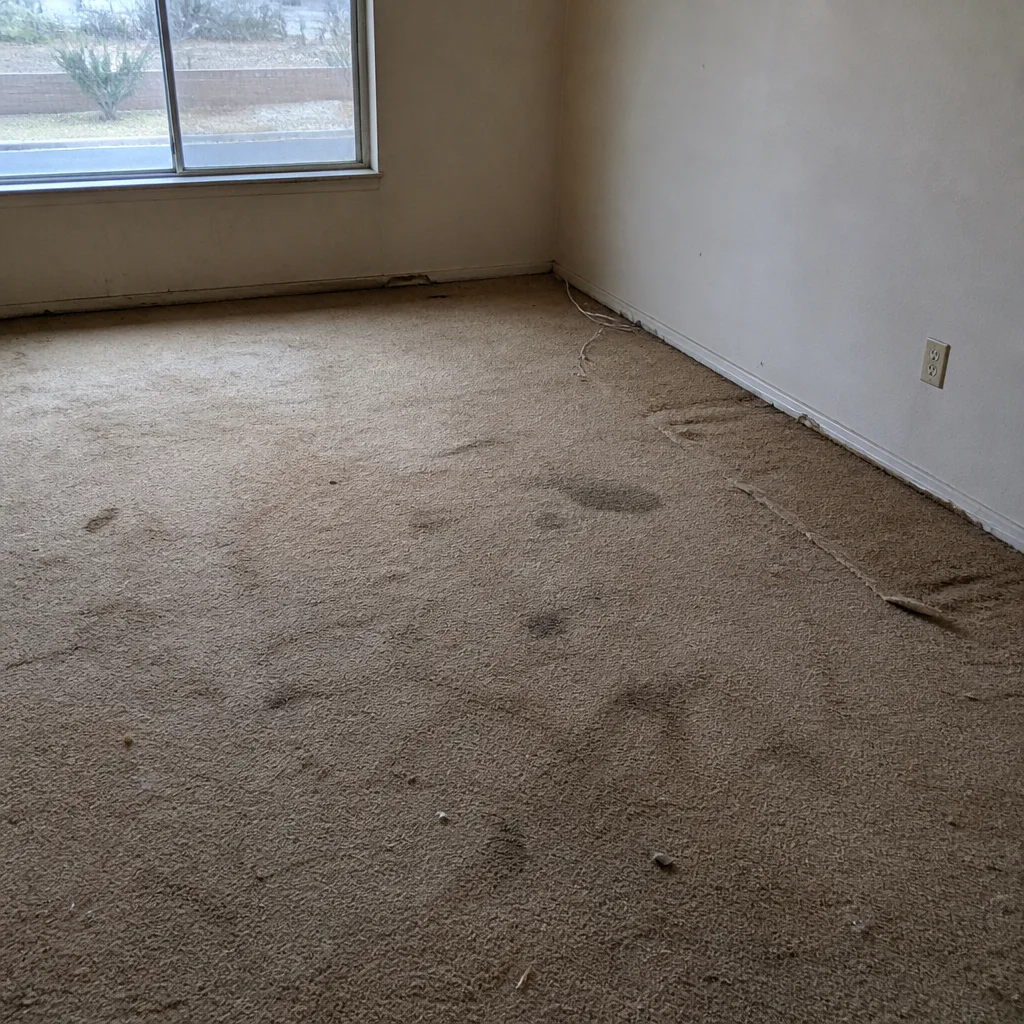
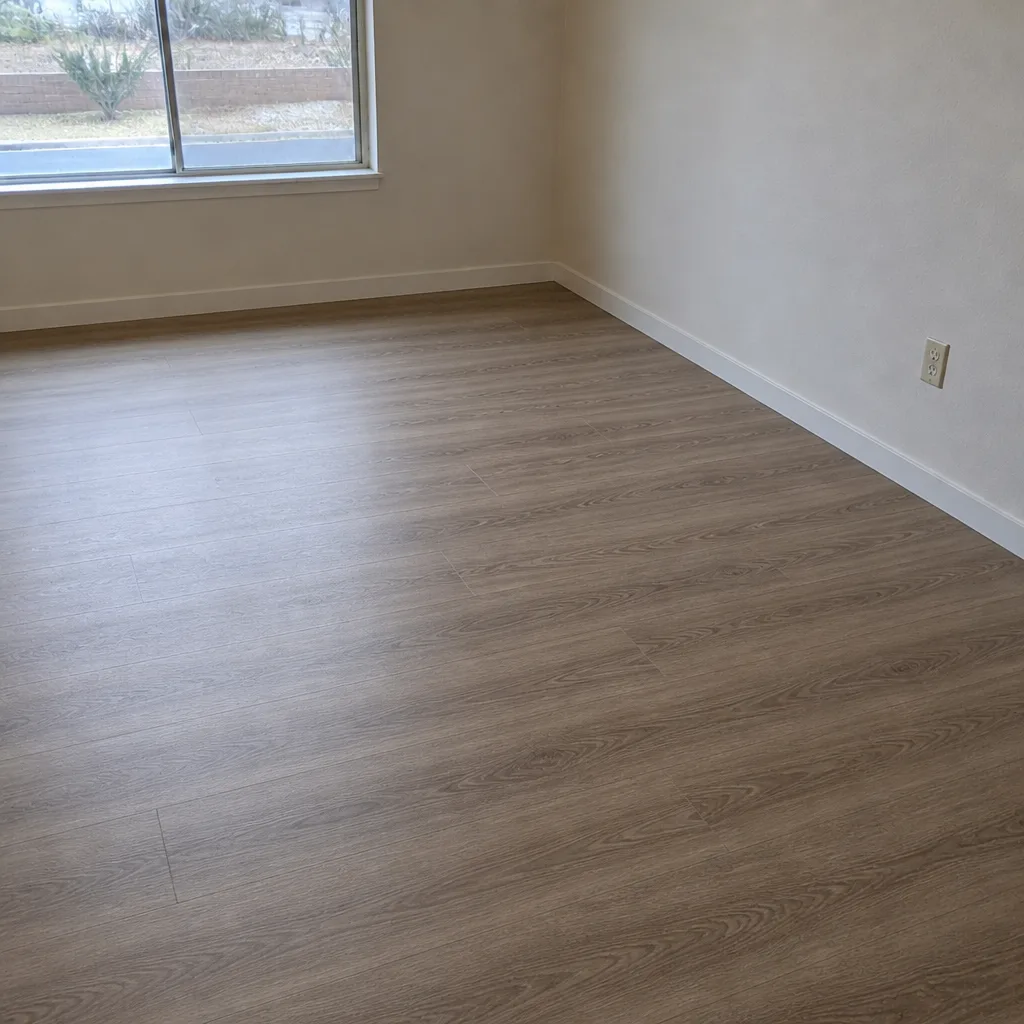
See the difference
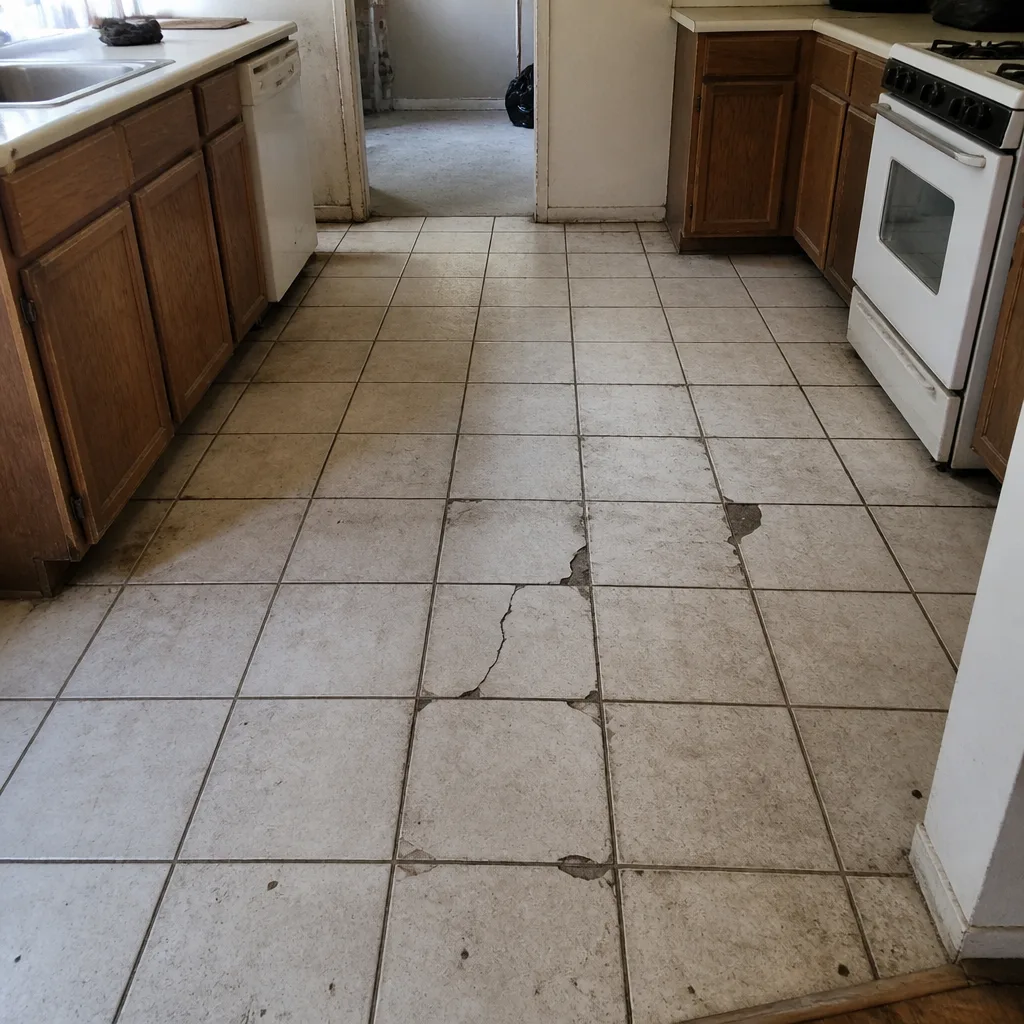 Before
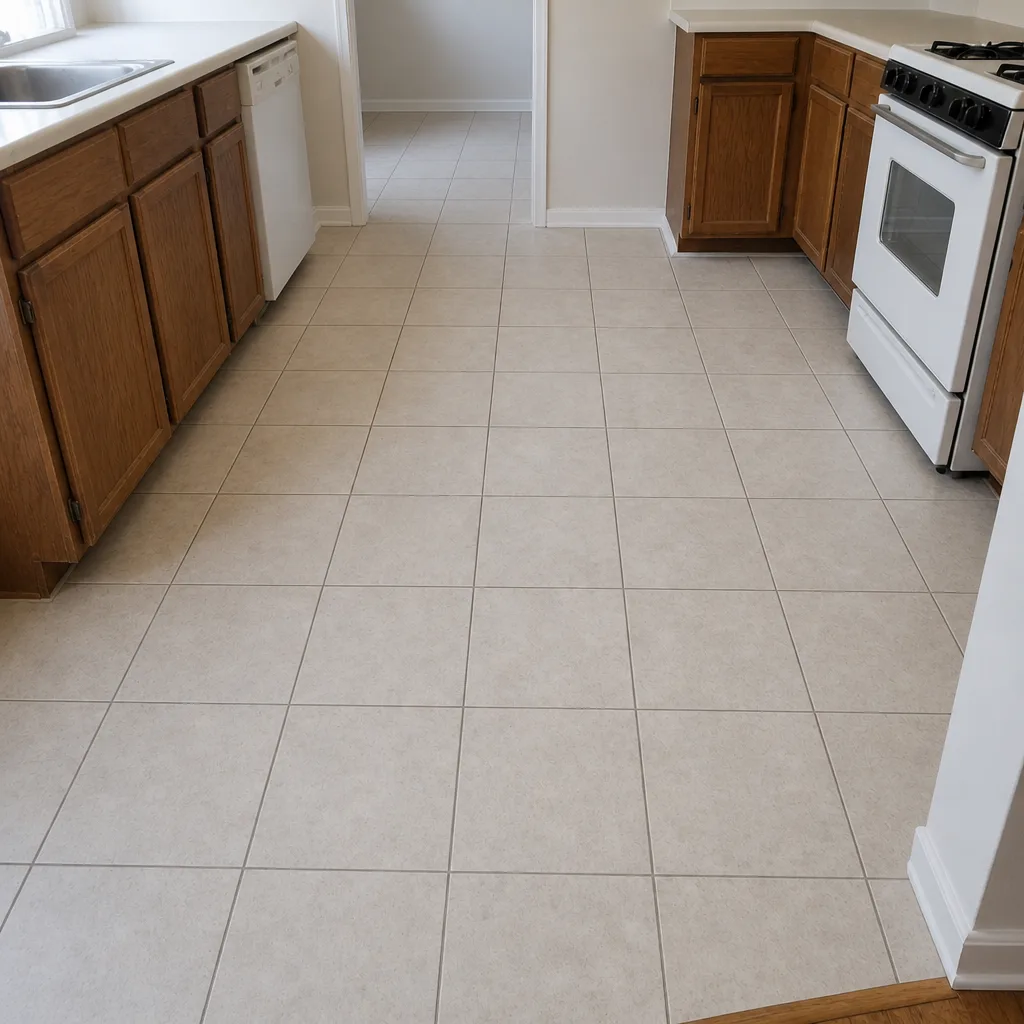 After
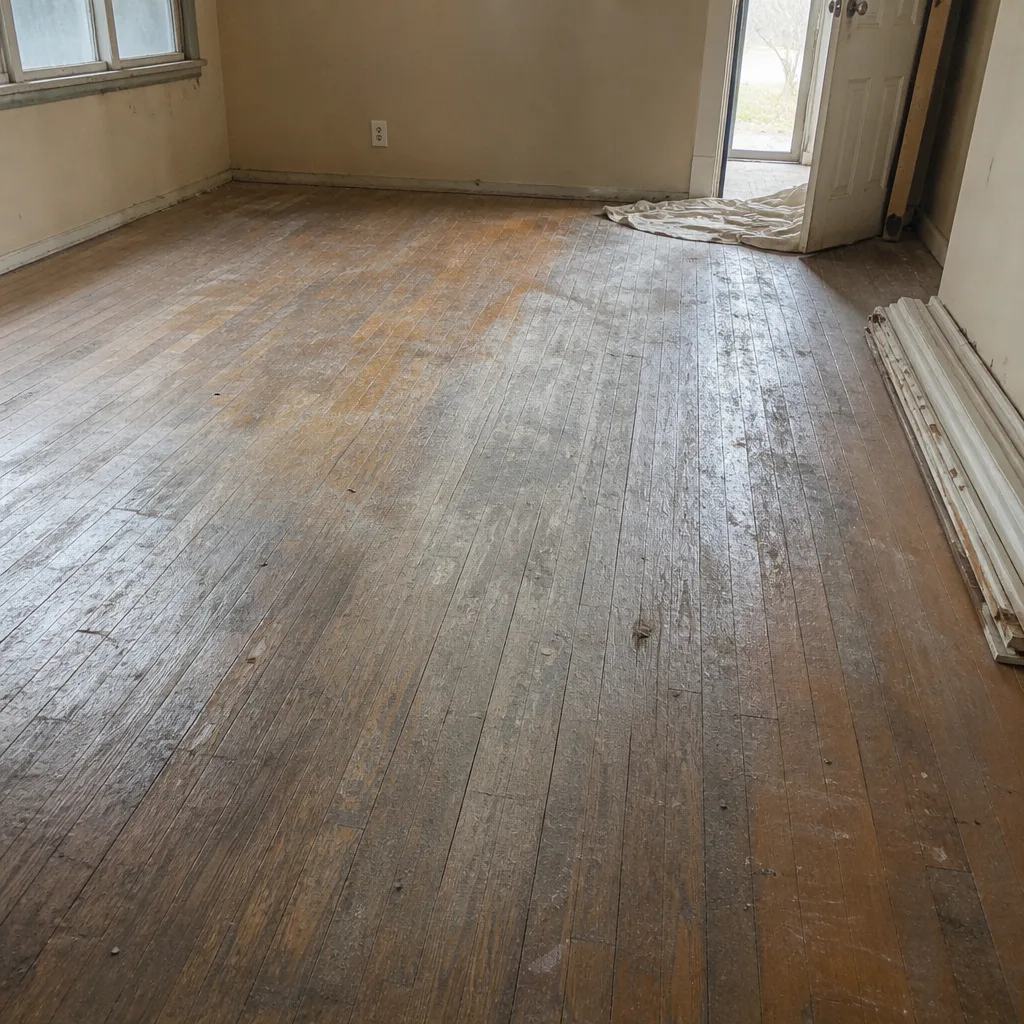 Before
 After
 Before
 After
When to Call a Professional
Some checks a homeowner can run. The subfloor inspection, moisture readings, hardwood thickness check, and finish matching all take tools and experience to do accurately. If you’re seeing cupping, buckling, hollow spots, gapping that’s widening, or moisture staining, it’s worth getting a professional out to look underneath before you call it. The same is true if a floor has gone through a water event, even if it looks dry on top. And if you’ve been quoted a repair or a replacement without anyone pulling a plank or checking the subfloor, a second opinion is worthwhile.
Flooring Sunrise Manor offers free estimates in Sunrise Manor. We supply and install carpet, tile, and hardwood from Mohawk, Shaw, COREtec, Pergo, LifeProof, Mannington, Armstrong, Daltile, and Karndean, and we refinish hardwood as a standalone service so a wood floor that can be saved doesn’t get torn out. Call (888) 403-9063. We answer 24/7. Fast dispatch from 7am to 7pm, Sunday through Friday.
Frequently Asked Questions
Pull back a section of the finished floor and check the subfloor. If the subfloor is dry, sound, and the product is still available, repair is usually the better answer. If moisture has reached the subfloor, the damage pattern is spreading, or the product is discontinued, replacement is usually the smarter investment. Call (888) 403-9063 for a free estimate that lays out both options.
Often, yes, but only if the subfloor is dry and structurally sound. A localized water-damaged section with a dry subfloor can usually be repaired by removing and replacing the affected planks or tiles. If the subfloor has swelled or the slab is passing moisture vapor, the subfloor gets corrected first, which usually means the flooring comes up too. Call (888) 403-9063 to schedule a free inspection.
Refinishing is typically less expensive than a full hardwood replacement, because it restores the existing wood instead of tearing it out and installing new boards. That only holds if the boards are thick enough to sand again. We check the wood thickness at the free estimate before quoting a refinish. Call (888) 403-9063 to book the estimate.
Cupping means the edges of each board or plank are curling upward, and it usually points to moisture reaching the flooring from below. If it’s caught early and the moisture source is corrected, cupping can often be flattened or repaired. If the boards have taken a permanent set or the whole floor is cupping, replacement is more likely. Call (888) 403-9063 for a free assessment.
You have three realistic options: accept a visible seam where the patch goes in, transition to a related product at a natural boundary like a doorway, or replace the whole floor to get a seamless result. The right choice depends on where the damage sits in the room. Call (888) 403-9063 and we’ll walk through the options on your floor.
A repair is usually a shorter job because it’s limited to the damaged area, and a full replacement takes longer because the whole room gets torn out, the subfloor gets corrected, and new flooring goes down. The exact schedule depends on the room size and subfloor condition, which we assess at the free estimate visit. Call (888) 403-9063 to schedule it.
The Bottom Line
The repair-or-replace decision isn’t about how bad the floor looks. It’s about what’s underneath. Check the subfloor first, map the damage pattern, and verify whether the product is still available before you accept any quote. Repair is usually the right call when the damage is isolated, the subfloor is dry, and the product matches. Replacement is usually right when moisture has reached the subfloor, the damage is systemic, the product is discontinued, or the floor is near the end of its life. Hardwood refinishing is an option a lot of homeowners overlook, and it’s worth asking about before the tear-out gets quoted. In Sunrise Manor, if a repair estimate didn’t include a subfloor check, ask why. Flooring Sunrise Manor gives free written estimates that lay out both sides. Call (888) 403-9063. We answer 24/7. Fast dispatch from 7am to 7pm, Sunday through Friday. Our technicians have up to 14 years of experience. You can Sunrise Manor homeowners trust us to tell you honestly which side of the decision your floor is on.
Written by the team at Flooring Sunrise Manor.