
Last updated November 17, 2026
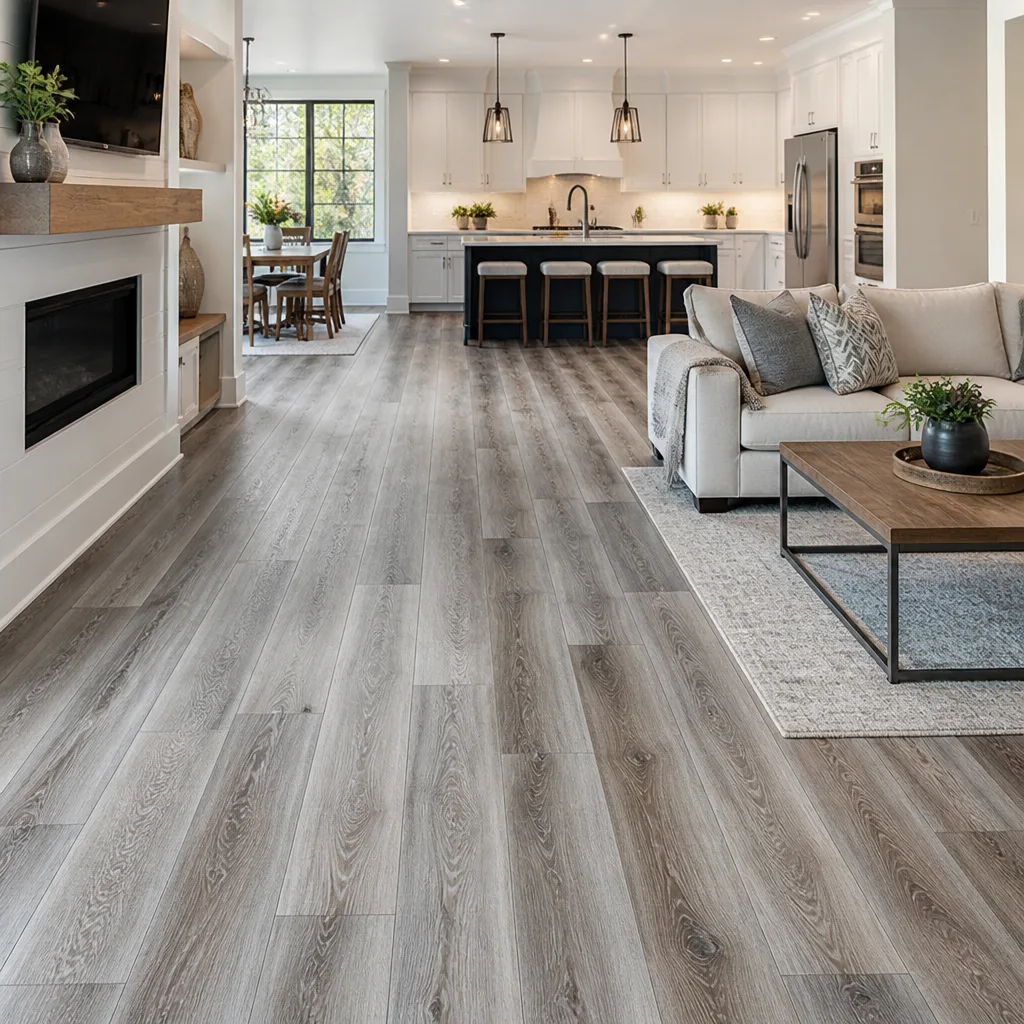 Luxury vinyl plank
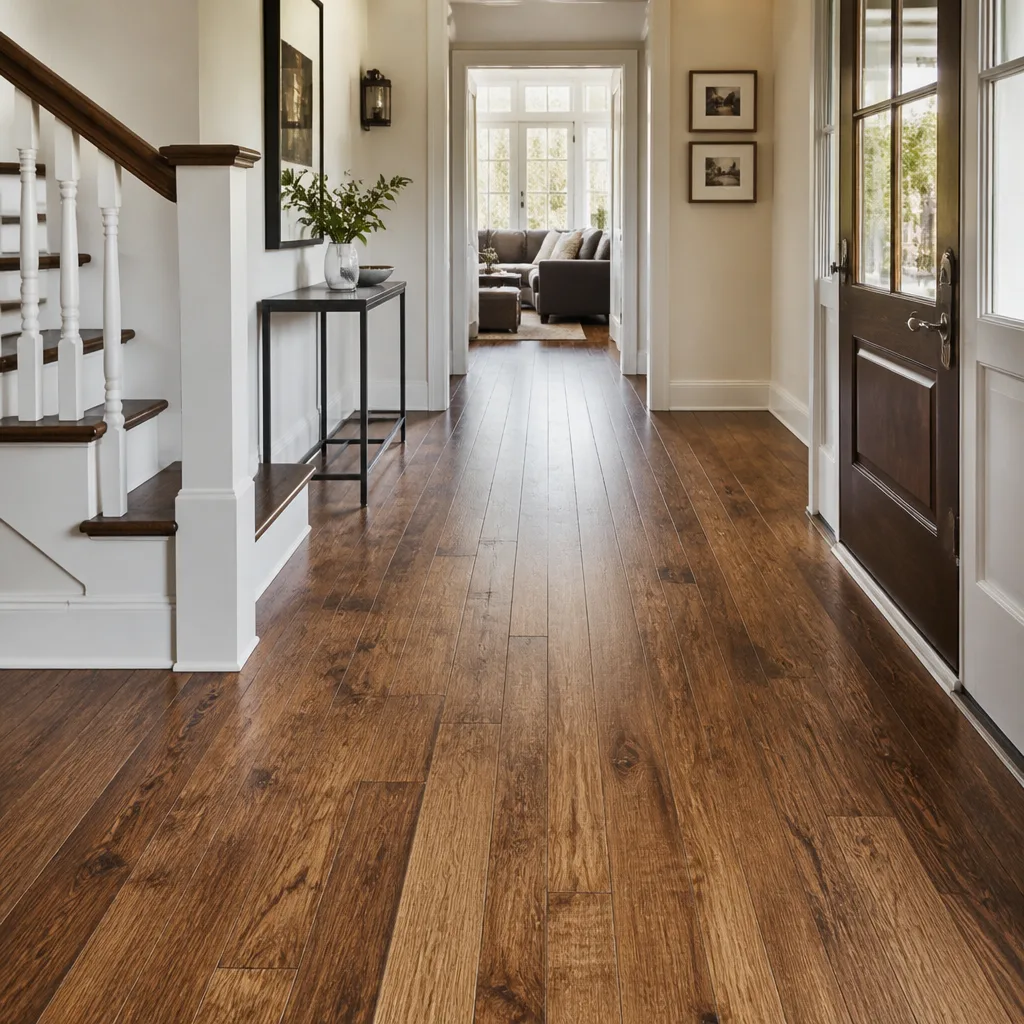 Hardwood
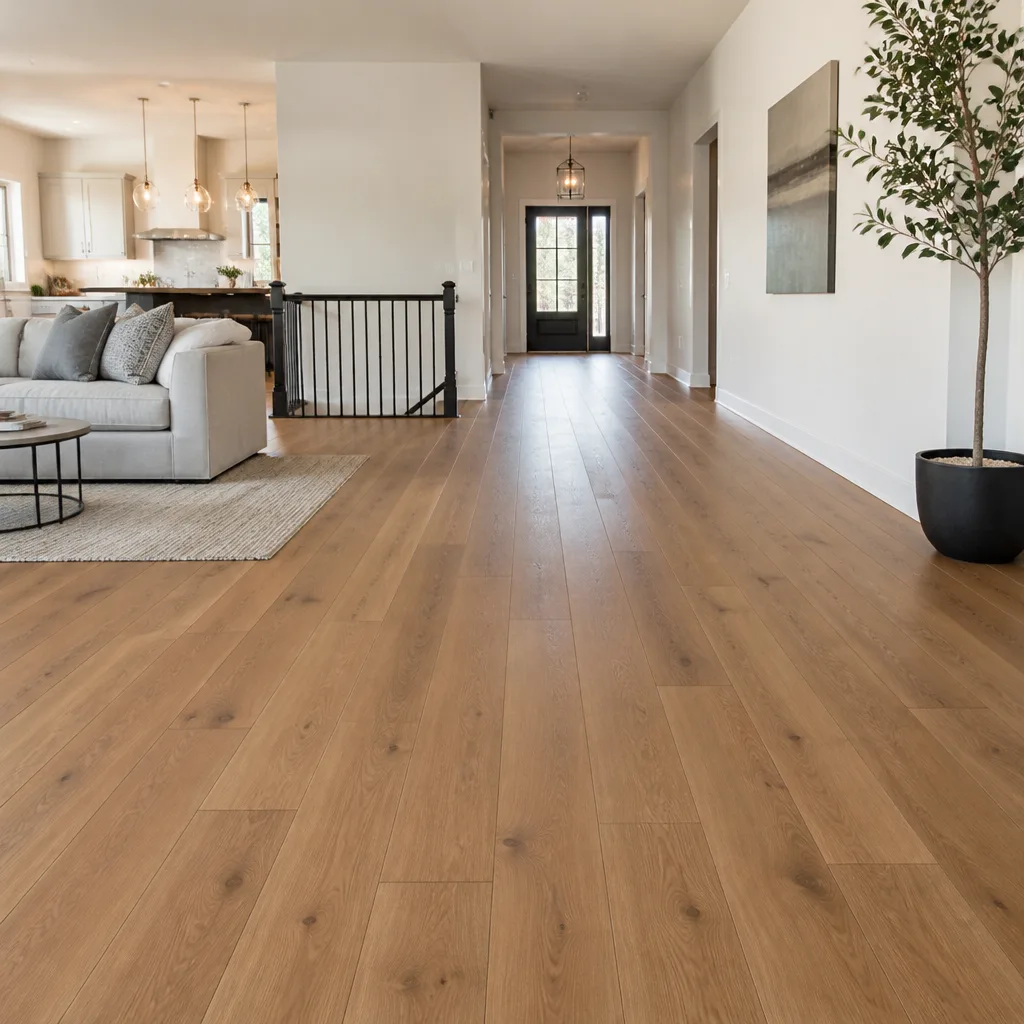 Engineered hardwood
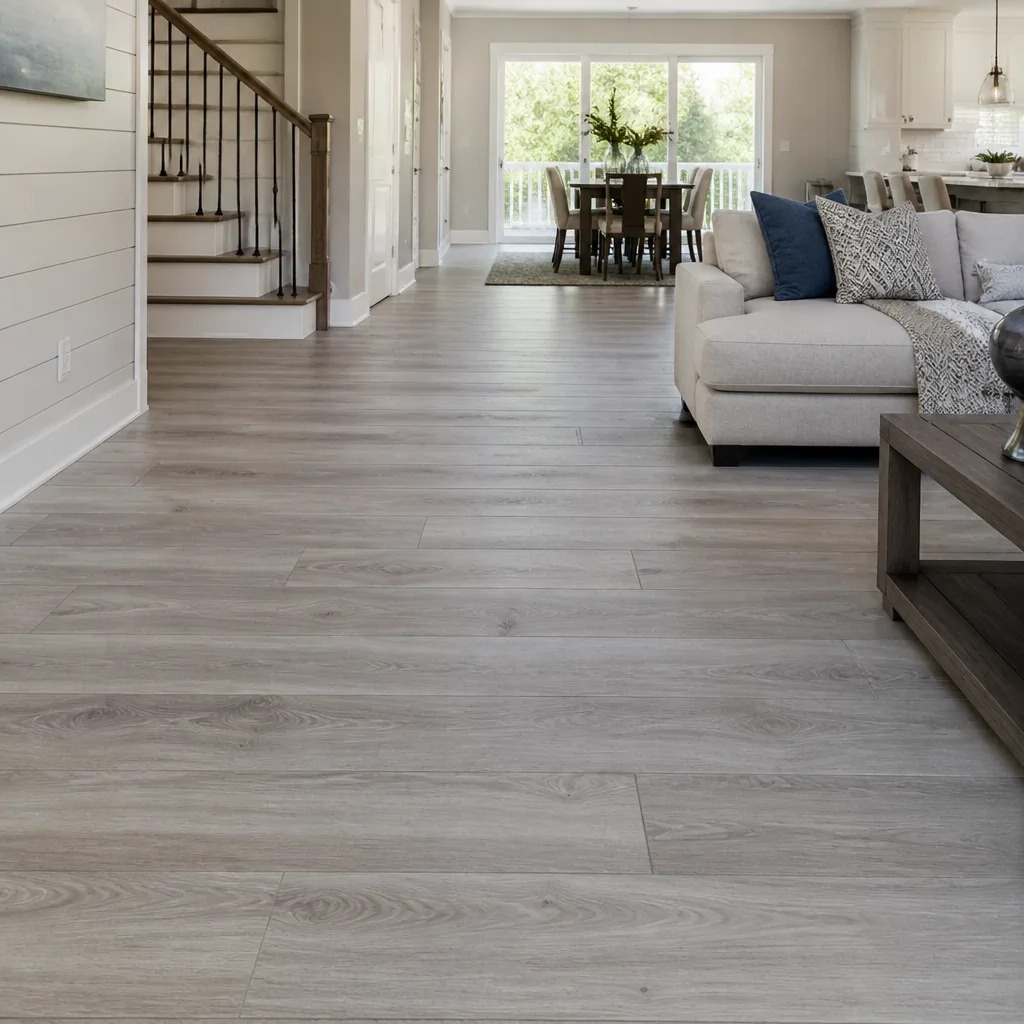 Laminate
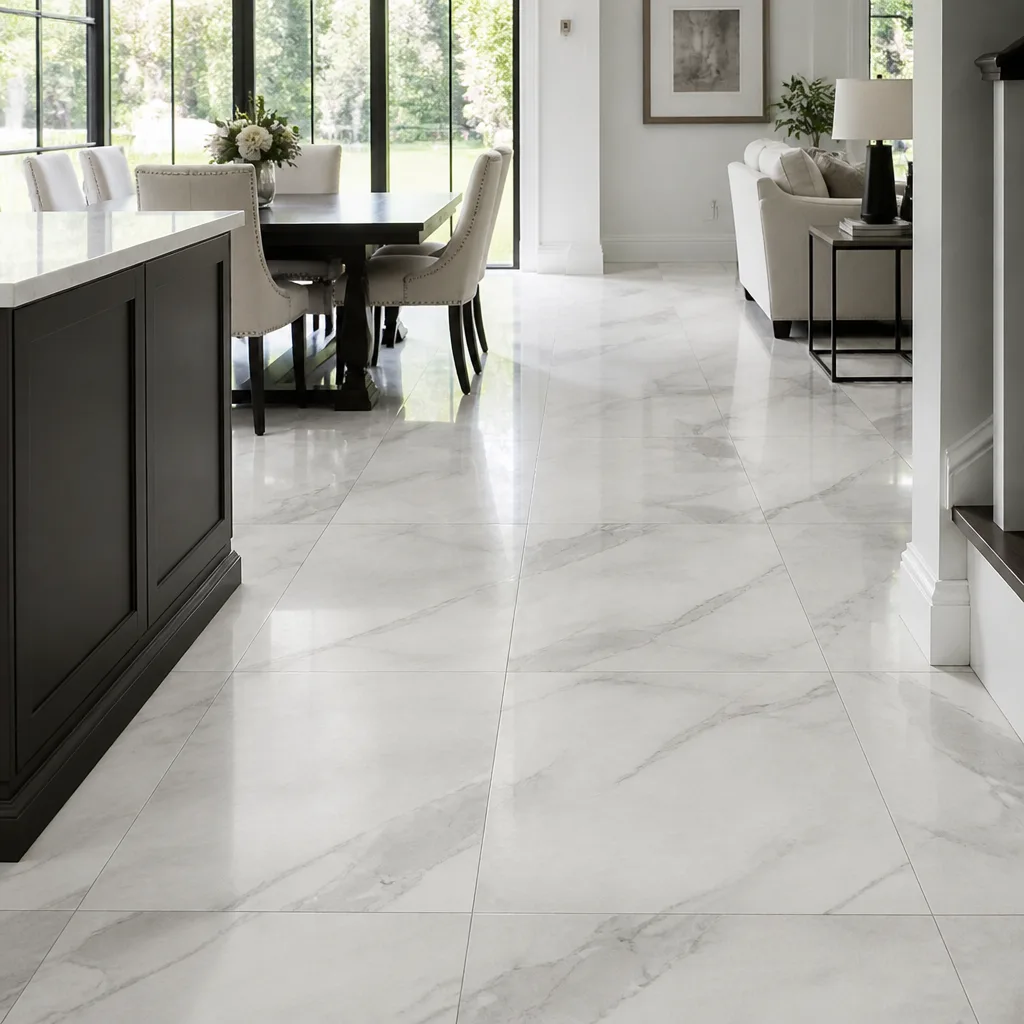 Porcelain tile
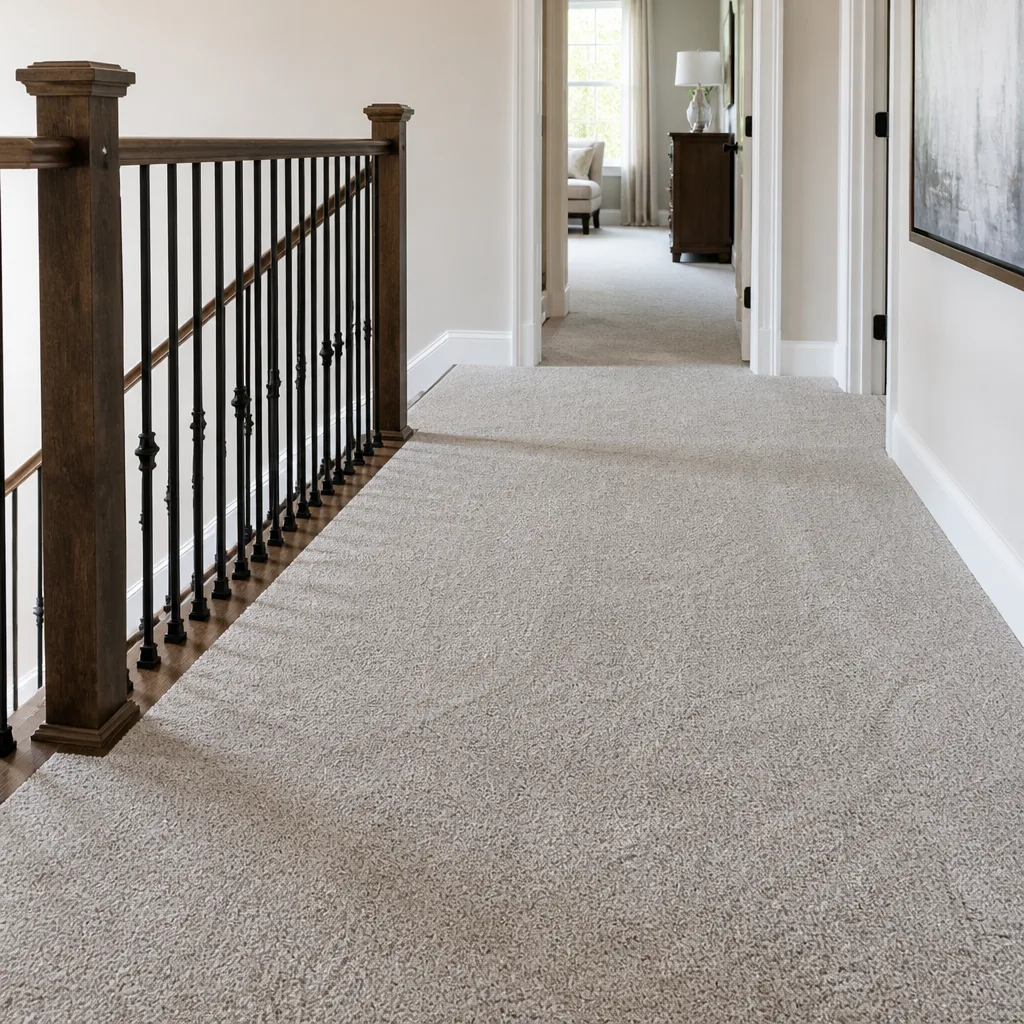 Carpet
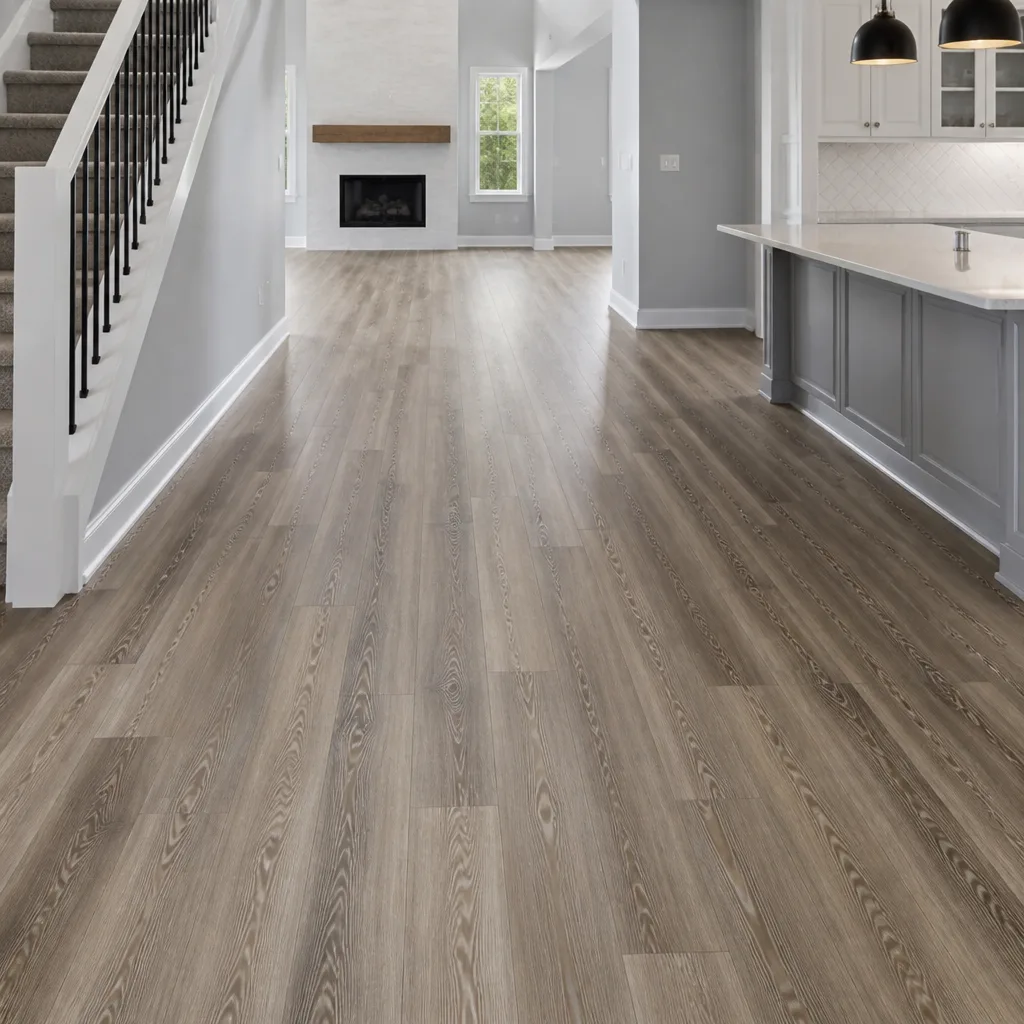 Shaw
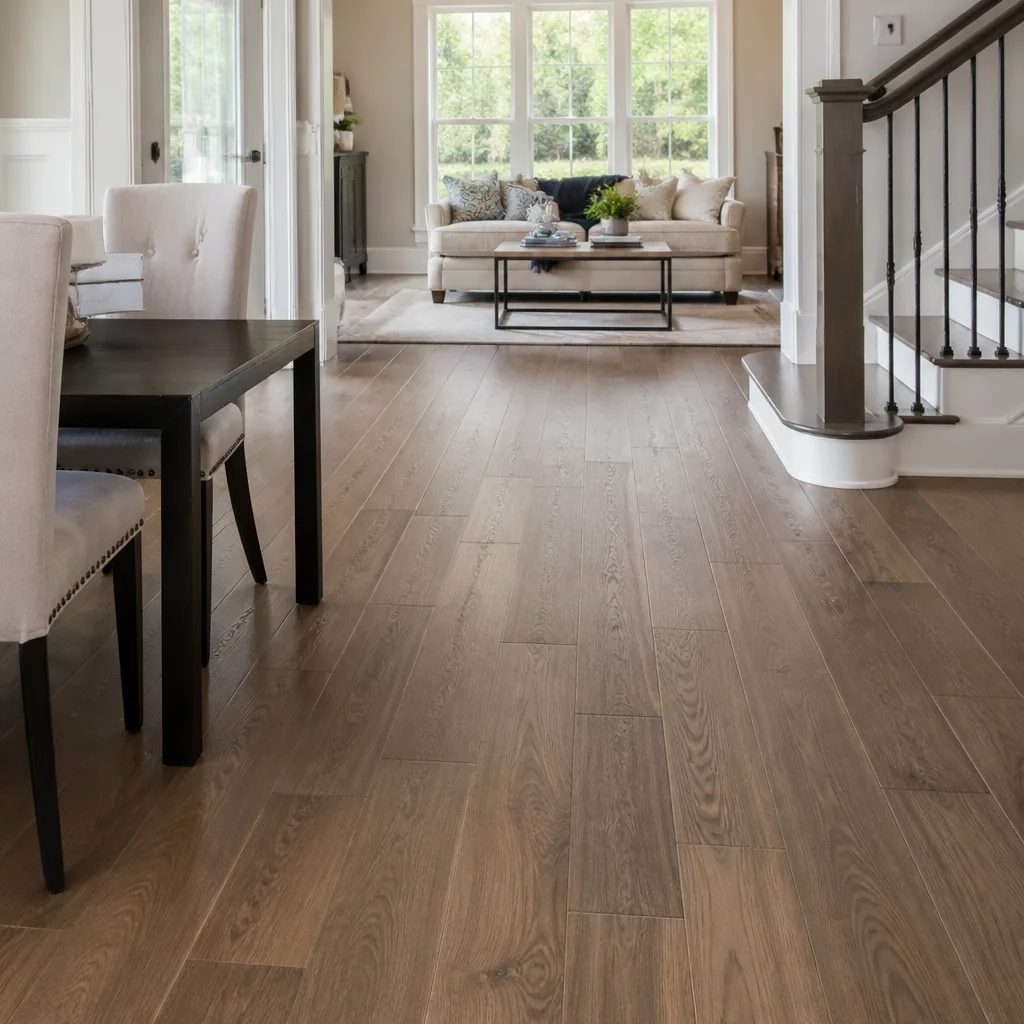 Mohawk
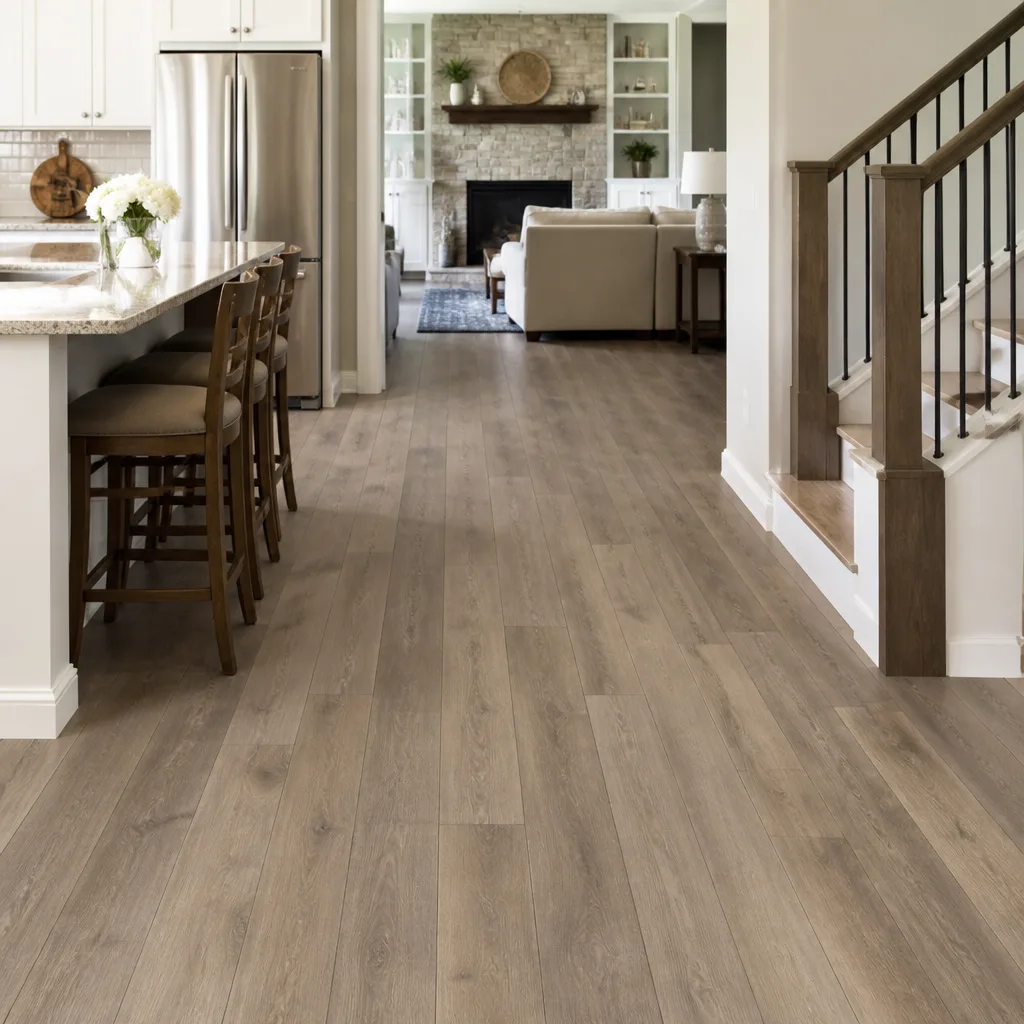 COREtec
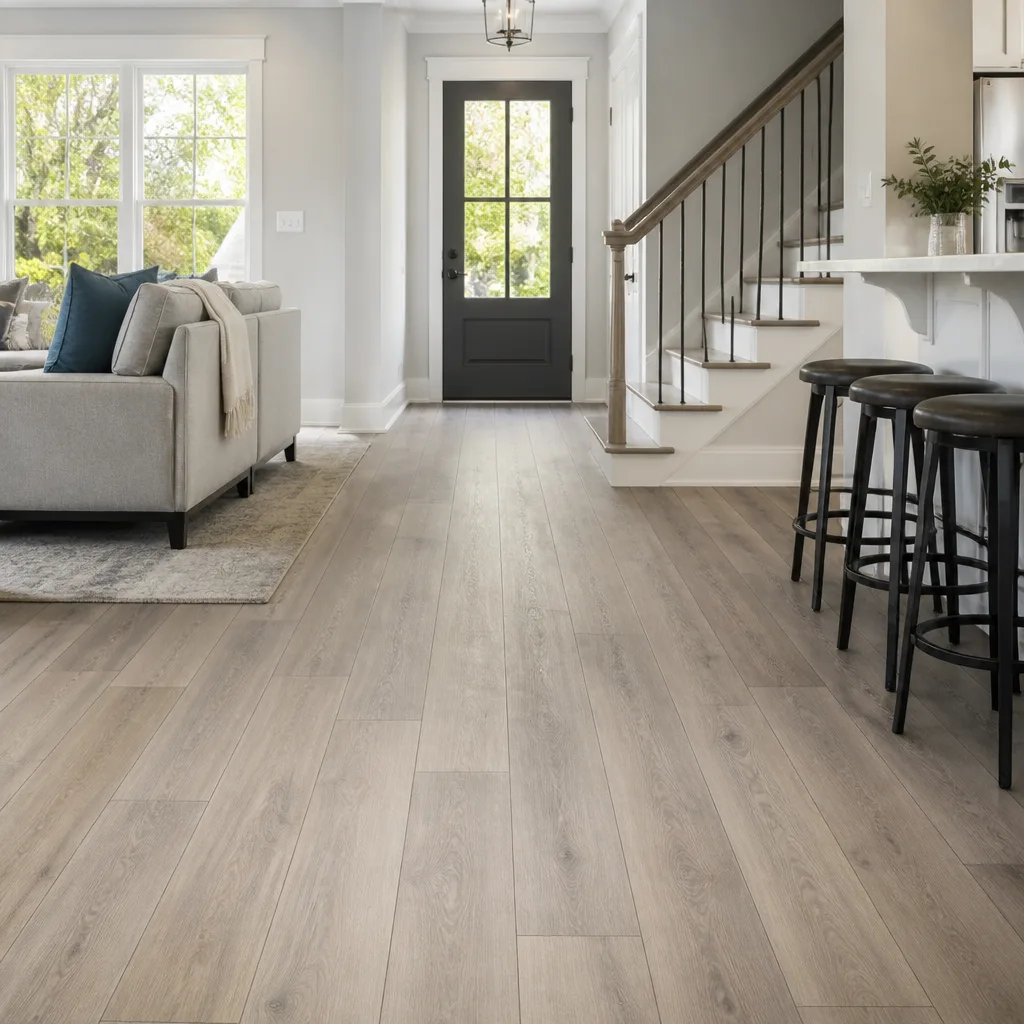 Pergo
Free in-home measure and written estimate: Shaw, Mohawk, COREtec and Pergo lines compared on your own rooms, with carpet, tile, vinyl plank, laminate and hardwood laid out side by side
Get your free estimateHardwood, Vinyl Plank, Laminate or Tile: How Sunrise Manor Homeowners Decide
Solid hardwood can be installed in Sunrise Manor, but the conditions required to keep it stable long-term are specific enough that most homeowners who choose it without that information end up with gapping within a year. This guide explains how to decide between hardwood, luxury vinyl plank, laminate and tile as an engineering decision rather than a style preference. You’ll learn which categories perform well on Sunrise Manor’s slab foundations, how to read tolerance specs and cross-reference them with the indoor climate you actually live in, and where engineered hardwood fits as a middle path.
Quick Answer
For most Sunrise Manor homeowners, the decision comes down to four inputs: what the subfloor is made of, how much direct sun the room gets, how much moisture the room sees, and whether you want a floor you can refinish later. If your home sits on a concrete slab, as most Sunrise Manor houses do, that rules out some options unless the moisture conditions are addressed. If the room has large south-facing windows, material stability under heat swings becomes the deciding factor. If the floor is existing hardwood in good condition, refinishing is often the smarter path than replacing it with any of the four categories above.
Styles & brands we work with
- Hardwood
- Engineered hardwood
- Luxury vinyl plank
- Laminate
- Porcelain tile
- Carpet
- Shaw
- Mohawk
- COREtec
- Pergo
Table of Contents
- Why Sunrise Manor’s Slab Foundations Change the Decision
- Dimensional Stability: What Heat and Sun Do to Each Floor
- Luxury Vinyl Plank: Reading the Stability Spec
- Laminate: Where the Moisture Risk Actually Lives
- Large-Format Porcelain Tile: The Main-Living-Area Case
- Engineered Hardwood: The Case for the Middle Path
- How to Cross-Reference Specs with Your Indoor Climate
- A Practical Decision Framework
Why Sunrise Manor’s Slab Foundations Change the Decision
Most Sunrise Manor homes sit on concrete slab foundations rather than pier-and-beam. That single construction detail drives almost every flooring decision here, and it’s the part of the conversation that rarely surfaces in a showroom. Slab means the floor surface you walk on is bonded closely to concrete, which is a moisture reservoir: concrete wicks moisture up from below and holds it there through the seasonal heat. Even with a proper vapor barrier, the slab is a different subfloor than a wood-framed floor over a crawlspace. Every flooring manufacturer writes a subfloor spec, and on a slab the moisture tolerance part of that spec becomes the question that matters most.
The second thing most Sunrise Manor homeowners don’t hear in the showroom: the vapor barrier under the slab and the bond to the concrete determine how much moisture can reach the underside of your floor. That’s why an in-home measure and estimate is not a formality here. It’s where the whole decision gets refined, because the person who walks the room is looking at the actual concrete, not a sample board.
What to check before choosing any category:
- Whether the room is over slab or over a framed floor.
- Whether there are known moisture signs at the perimeter of the slab.
- Whether the room connects to a wet area and how the transitions are built.
- Whether a previous floor was glued down, which affects surface prep.
A Sunrise Manor specialist should ask these questions at the estimate. If they don’t, that’s your first red flag. Refinishing also enters the picture here: existing hardwood over a framed floor can usually be evaluated for sanding and re-coating, which is a very different conversation from laying new material over a slab.
Dimensional Stability: What Heat and Sun Do to Each Floor
Every flooring material expands and contracts as temperature and humidity shift. The question in Sunrise Manor isn’t whether movement happens; it’s how much movement the material tolerates before it becomes a visible problem like gapping, cupping, or crowning. Solid hardwood is the most sensitive of the four categories here. It absorbs and releases moisture across the whole thickness of the wood, so it moves in width in a way engineered planks and rigid-core vinyl don’t. Summers in this part of Nevada reach temperatures that push indoor humidity swings hard, and the winter heating season dries the air further.
Here’s the plain-language version of each category:
- Solid hardwood: moves most, tolerates the narrowest range, requires careful stabilization of the indoor environment to stay flat long-term.
- Engineered hardwood: core construction limits movement in the plane of the plank, so it tolerates a wider indoor range than solid.
- Luxury vinyl plank: rigid-core products move least; flexible WPC products move more over large temperature swings.
- Laminate: moves very little dimensionally, but is sensitive to moisture reaching the core through seams.
- Tile: effectively does not move with humidity at all, though it needs room for expansion at the perimeter.
This is where the showroom failure happens: samples on a rack look identical all day, and the differences in dimensional behavior only surface after two or three seasonal cycles in a room with a lot of glass. If a room in the house has a large south or west-facing window run, treat that room as its own decision, not the same decision as a hallway or a north bedroom.
Luxury Vinyl Plank: Reading the Stability Spec
Luxury vinyl plank has become the default choice for a lot of Sunrise Manor homeowners, and for good reason: it tolerates the heat swings better than wood and it holds up under daily traffic. But “LVP” covers a wide product range, and the construction detail that matters most is whether the plank has a rigid core or a flexible WPC core. It’s the difference between a floor that behaves on a hot south slope of the living room and one that shows edge peaking at plank seams.
The rigid-core products lay flat over a wider temperature range because the core resists movement in the plane of the plank. Flexible WPC products are softer underfoot and quieter, but they are more sensitive to sustained heat. On a room with a large south-facing window, the floor surface near the glass can run well above ambient room temperature, and that’s where a flexible core starts to work harder than a rigid one. Neither is “wrong”; they’re just solving different problems.
When comparing LVP options, read these four things:
- The product’s stated temperature tolerance range in the manufacturer’s installation instructions.
- The core construction: rigid, WPC, or SPC.
- The underlayment: whether the plank carries its own attached pad or the room needs a separate one.
- The wear layer, which sets how the surface handles traffic, not how it handles heat.
LifeProof is the brand most of our customers start the LVP conversation with, and it’s a solid place to begin. The real work is choosing the right product within a brand line, and that’s what the estimate measures against. One thing we won’t say: no plank is waterproof in the sense that standing water or moisture from below can be ignored. Water-resistant, yes. Deal with any leak source, always. If the room has had any past water event, we want to see it at the estimate before we talk about any plank.
Laminate: Where the Moisture Risk Actually Lives
Laminate has a quiet advantage and a real liability. The advantage is that the wear surface holds up under the kind of daily traffic a busy Sunrise Manor household puts on it. The liability is moisture, and it’s a bigger liability on a slab than the surface rating on the sample card suggests. The surface of a laminate plank can be very water-resistant. What takes on water is the core, and the core is exposed at the seams, the edges, and any cut end. That’s where a slab matters: if moisture migrates up modestly and reaches the underside of a plank through a gap, the core can swell at the edges even when the surface never looks wet.
This is why the “water-resistant” label on the surface and the actual moisture exposure of the subfloor are two very different conversations. Manufacturers rate the product on the assumption of a compliant subfloor. A compliant subfloor is exactly what the estimate visit is verifying. So when a homeowner tells us “the card said it handles water,” the honest answer is: yes, on top, and your slab is below.
Where laminate makes sense in Sunrise Manor:
- Rooms with low moisture exposure and a dry subfloor verified at the estimate.
- Rooms where the look of a laminate with a realistic wood print is what the household actually wants.
- Transition areas where a softer, warmer surface than tile or vinyl is preferred underfoot.
Pergo is the laminate brand we most often discuss with Sunrise Manor homeowners, and its surface durability is part of why. Pergo performs well when the conditions under it are right. We don’t install laminate over a slab with unaddressed moisture signs, because we’d rather say no to the sale than come back to a floor we know will fail.
Large-Format Porcelain Tile: The Main-Living-Area Case
Large-format porcelain tile deserves more of a look than it usually gets in Sunrise Manor living rooms, and the case isn’t aesthetic first. It’s performance. Tile doesn’t care about humidity swings. It doesn’t move in the plane of the floor, it doesn’t wick moisture into a core, and it doesn’t gap at seams. In a main living area of a Sunrise Manor home where the floor runs from a shaded hallway through a sun-loaded living room, tile is the material least likely to change behavior across that whole run. That’s a real advantage, and a lot of homeowners discount it because they assume tile reads cold or commercial.
Large-format tile specifically, meaning the modern big-format porcelains, changes the aesthetic conversation. Grout lines disappear, the room reads more continuous, and each tile covers more square footage, which cuts down on grout surface. The practical findings from our own experience matter here too: tile is only as good as the substrate. Over a slab, a flat surface is essential. Large-format tile amplifies any wobble in the floor, so prep is what determines whether the install holds up. Daltile is the tile brand we work with most often on these jobs because it’s a professional-grade line used across both high-end residential and commercial work, and that consistency of batch and format helps on a large room.
When tile is the strongest choice for a Sunrise Manor room:
- The room runs across multiple sun exposures and you want the floor to behave the same way throughout.
- The room is a wet-adjacent space (entryway, kitchen, laundry) where moisture events are part of normal use.
- The household wants a floor that won’t need to be replaced for the life of the home, and accepts that it can’t be refinished either.
- You want a hard, stable surface that doesn’t trap heat at the seams.
If tile flooring installation is the direction you’re leaning, the estimate visit is where the subfloor gets measured and the specific tile format and grout line get chosen. We schedule the install day after that, not before.
Engineered Hardwood: The Case for the Middle Path
Engineered hardwood is the category that most often gets skipped in the conversation, and it’s the one that deserves a fair hearing. The product is a real wood surface bonded over a plywood-composite core, and the core is what determines whether it works on a Nevada slab. This is where the whole conversation gets specific, because engineered isn’t one thing: the core construction is what separates one engineered plank from the next, and it decides the slab suitability more than the top wood species does.
The two core types you’ll see:
- Plywood core: layered wood plies, resilient, resists moisture ingress better than a fiber core, generally the more stable choice over concrete in a hot climate.
- HDF and similar fiber cores: denser, heavier, dimensionally stable in the plane of the plank, but more sensitive to moisture reaching the core edges. Behavior depends heavily on the vapor control under the slab.
Neither is defective. Both are engineered, and both outperform solid hardwood on a Sunrise Manor slab in most rooms under real conditions. What differs is how the plank behaves if any moisture reaches the underside. That’s why the question to ask on engineered is: which core, and does the manufacturer’s subfloor spec match what we’re installing over? Mannington makes engineered products across multiple core types, so the conversation here is more about product line within a brand than about the brand itself.
Engineered is also the best fit for homeowners who want a floor that can be sanded and refinished at some point down the road. Solid hardwood can be refinished more times over its life, but engineered can typically be refinished depending on the thickness of the wear layer, and that’s a decision point the estimate visit sorts out. Refinishing its existing floor is a service we provide separately, and if a Sunrise Manor home has an older hardwood floor worth saving, restoring it usually beats installing an engineered floor over it.
How to Cross-Reference Specs with Your Indoor Climate
Every flooring installation instruction has a section on temperature and humidity ranges. Most homeowners skip that page. We’d rather they didn’t, because it’s the page that tells you whether the product you’re considering will behave in the room you’re putting it in. The task isn’t to memorize the numbers; it’s to know what conditions the room regularly sees and to compare that against the product’s stated tolerance.
A step-by-step approach to reading the spec against your actual home:
- Find the product’s stated temperature and humidity tolerance in the installation instructions. The manufacturer sets this; the written estimate references it.
- Watch the room across a hot week. Notice where sun hits the floor directly and how warm the floor feels near the glass.
- Watch the same room in a cold week with heat running. Dry interior air is common in this climate, and humidity drops.
- Note which rooms stay most consistent across seasons. Those are the rooms where the most sensitive materials can live.
- Match the material’s tolerance to the room’s swing, not to the whole house.
What we don’t do is give you a specific humidity reading or a set point to aim for. Those numbers depend on the product and are set by the manufacturer’s installation instructions, not by us. What we will say: engineered hardwood, rigid-core LVP, and tile have the widest flexibility on the indoor conditions a Sunrise Manor home actually delivers. Solid hardwood and fiber-core products have tighter ranges. Laminate’s core is the part most affected by moisture, and no amount of watching the thermostat makes up for moisture that arrives from the slab. That’s why a proper vapor control setup at the slab is part of the install, and why we won’t skip it.
A Practical Decision Framework
Here’s the decision framework we walk through with Sunrise Manor homeowners. It doesn’t try to crown one category. It eliminates the ones that don’t fit your specific room and household, and the answer usually emerges from that elimination rather than from a preference.
- Start with the subfloor. Slab, framed, or a mix. This narrows everything that follows.
- Identify the sun-loaded rooms. South and west-facing window runs are their own conversation.
- Ask whether moisture is a concern in this specific room. If yes, prioritize tile, rigid-core LVP, and engineered hardwood over laminate or solid natural material.
- Ask whether anyone in the household wants a floor that can be refinished later. If yes, engineered is the middle path; if no, tile and vinyl plank become more attractive.
- Look at the existing floor if there is one. Hardwood that’s still structurally sound may deserve refinishing instead of replacement.
- Decide how many rooms are being done. Multiple rooms with different needs often work better as one coordinated job with one installer.
- Get the written estimate. The written estimate, not the sample shelf, sets the final price and the scope.
Sunrise Manor homes tend to be renovated room by room rather than all at once, and that’s where having a single point of contact for flooring Sunrise Manor across your carpet, tile, and hardwood work saves real coordination headaches. Our technicians have up to 14 years of experience across these categories, and that experience is what turns the framework above into a specific recommendation for your specific rooms.
How Carpet Pairs with the Hard-Surface Decision
The four-category question at the center of this guide is about the hard-surface floors. Carpet doesn’t compete with them; it complements them, and the sequencing matters. If you choose tile or vinyl plank for main areas, the bedrooms are usually carpet, and a carpet installation scheduled alongside the hard-surface work means one crew delivering a consistent transition at every doorway. That’s not a sales pitch for carpet; it’s a workflow choice most Sunrise Manor homeowners appreciate once they’ve tried coordinating two installers. During the bedroom decision, the same questions apply as in the framework above: what does the room see across seasons, and what do the occupants want underfoot.
Hardwood Refinishing vs. Replacement: A Separate Decision
If the existing floor in a Sunrise Manor home is real wood, the question isn’t “hardwood versus vinyl plank” at all. It’s “refinish versus replace,” and the honest answer is often refinish. Restoring a solid hardwood floor is a skilled-trade service that most flooring retailers simply don’t perform; the alternative they usually offer is tearing out the existing wood and putting down a new product. That’s not always wrong, but it’s not always the answer either. Whether a wood floor can be refinished depends on the thickness of the wood and its condition, which we check at the estimate. Every floor is different. We don’t promise a refinish will work before we’ve seen it, and we don’t promise a stain will match a sample. What we do promise is a straight answer about which path makes sense once we’ve been in the room.
See the difference
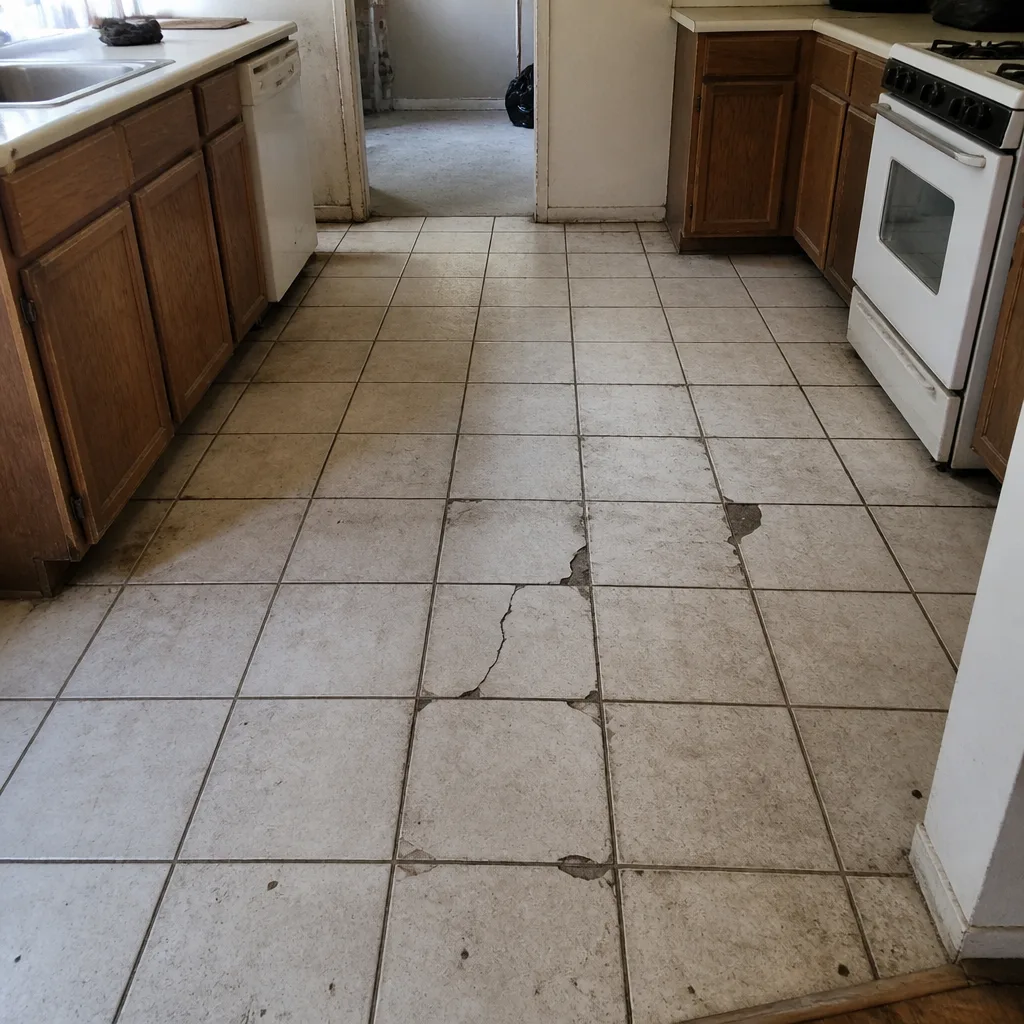 Before
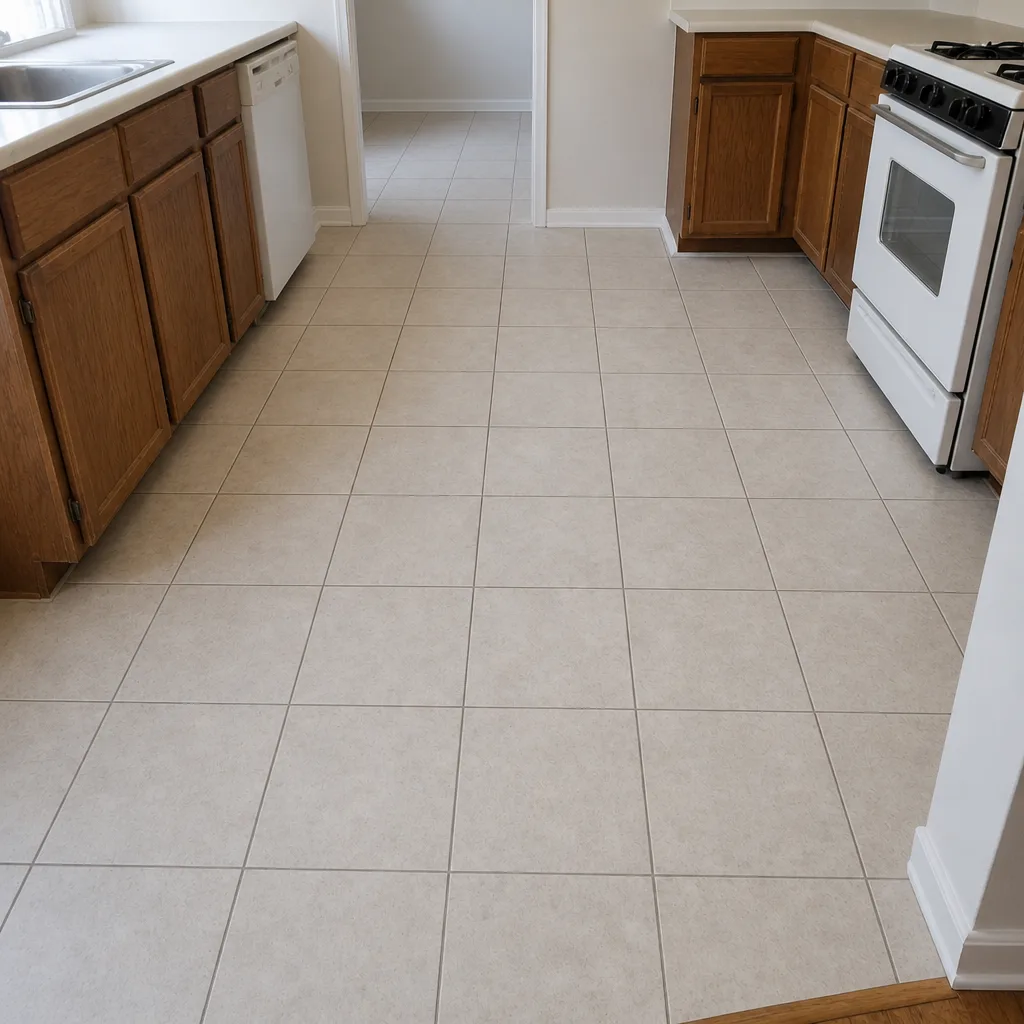 After
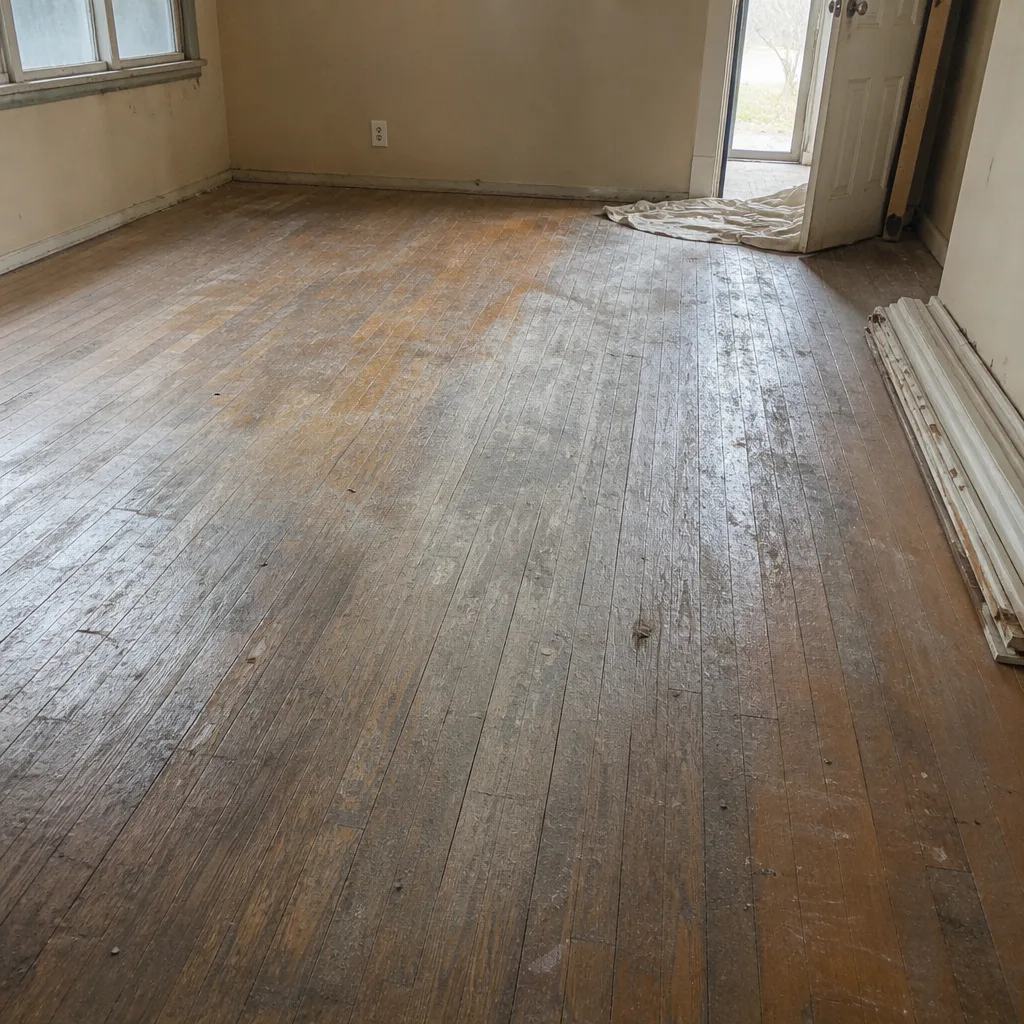 Before
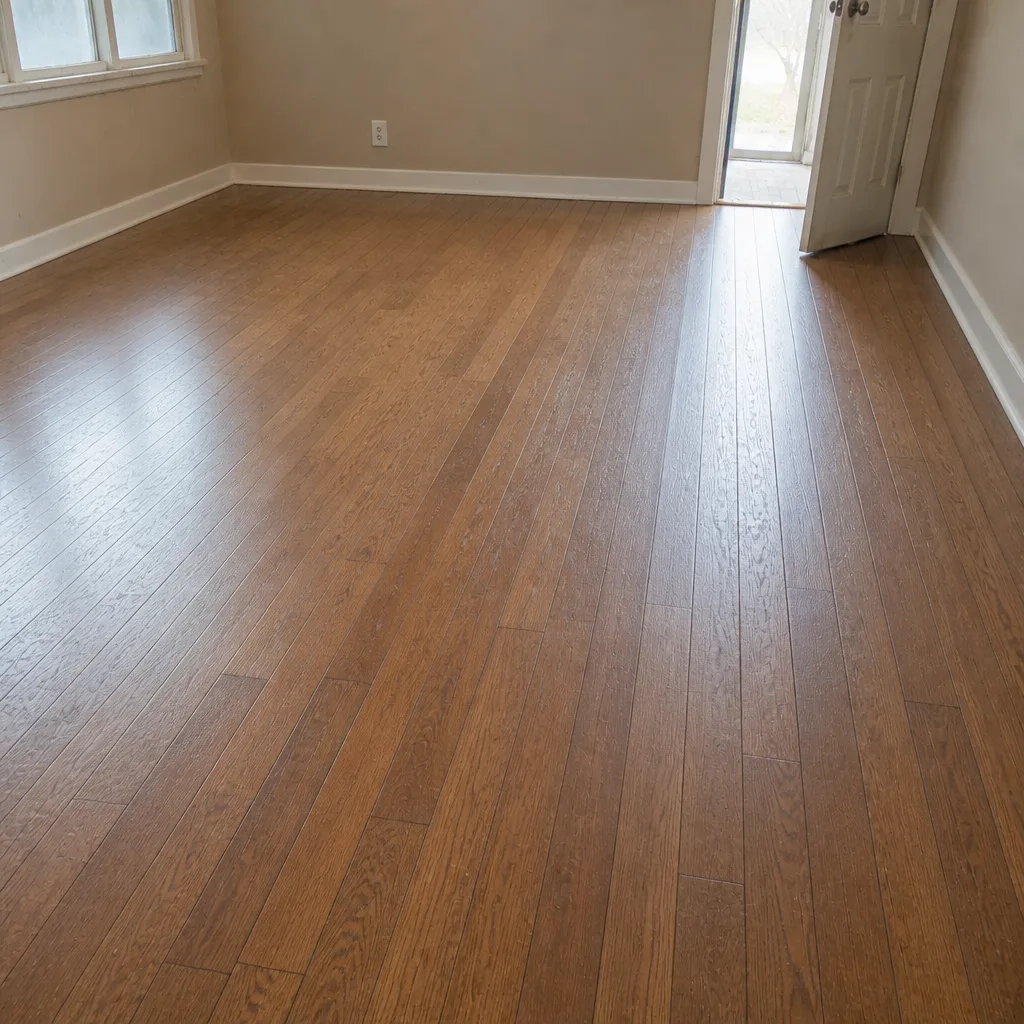 After
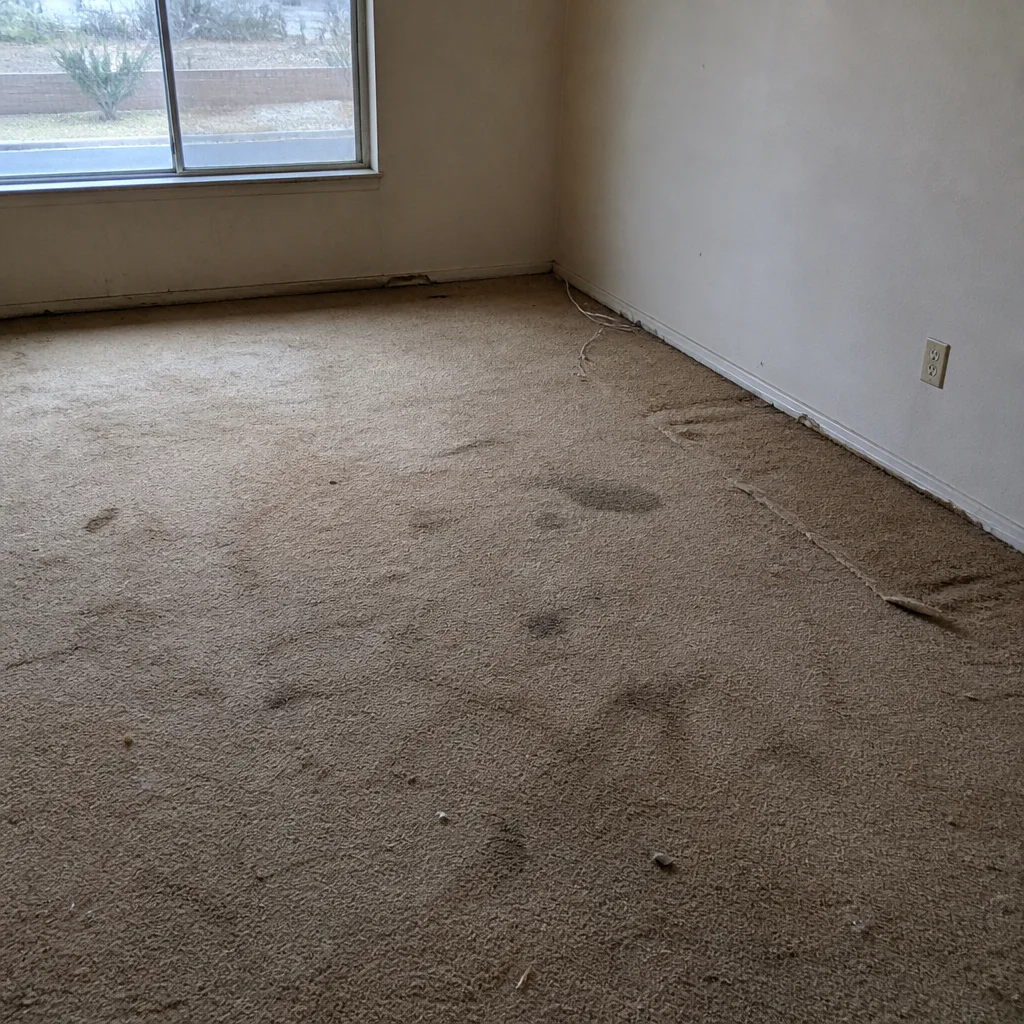 Before
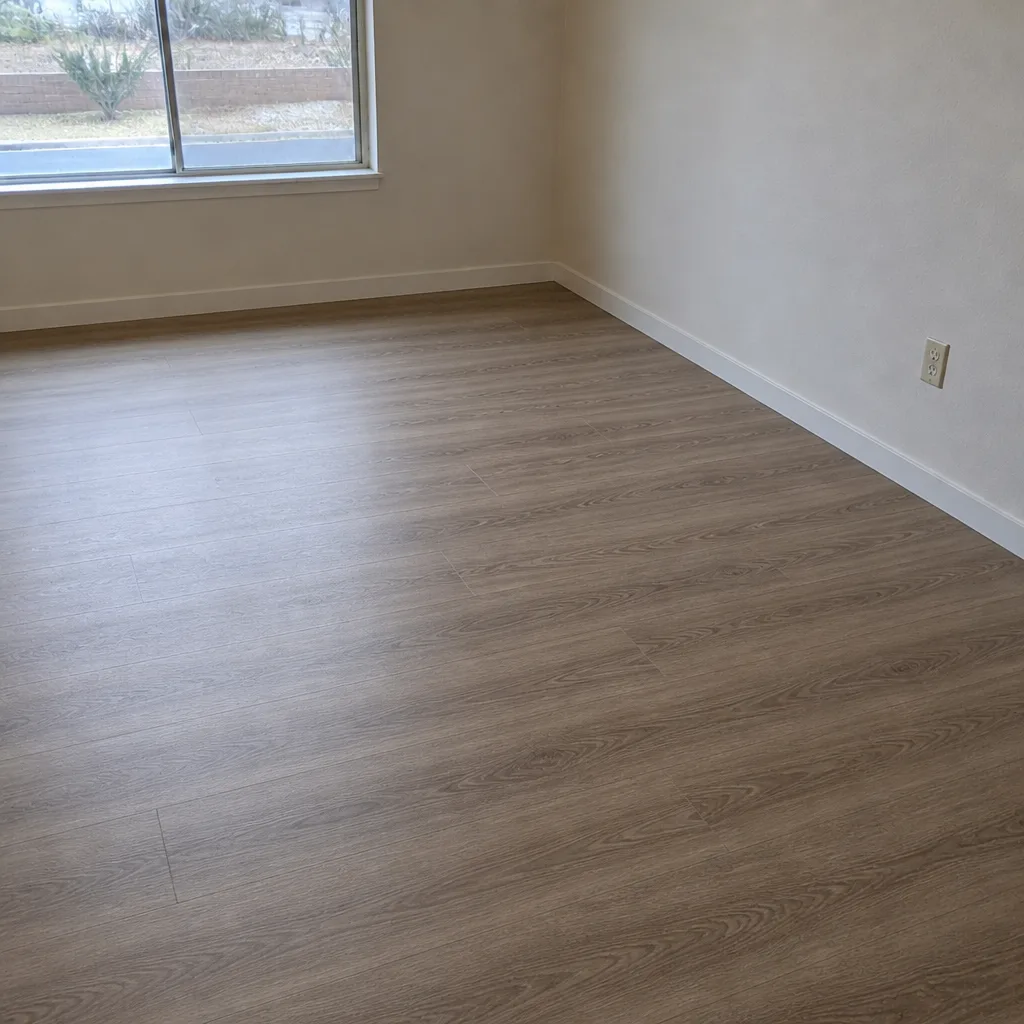 After
Common Mistakes to Avoid
- Choosing the floor from a sample in a showroom. A sample board doesn’t reflect how a material behaves in a Sunrise Manor room with big south-facing windows and a hot slab under it – insist on an in-home estimate where the actual conditions get read.
- Assuming the surface “waterproof” label tells the whole story. A water-resistant surface doesn’t mean the core is immune, and on a slab the underside of the plank is the part that matters most.
- Installing solid hardwood without checking the indoor humidity tolerance. The climate in this part of Nevada swings hard season to season, and solid wood is the least tolerant of the four categories under those swings.
- Treating the whole house as one decision. The room with the biggest sun exposure needs its own answer, sometimes a different category than the hallway next to it.
- Skipping a subfloor moisture reading at the estimate. If nobody measures the slab before quoting the install, you’re quoting a floor for a room that hasn’t been verified.
- Assuming refinishing is always cheaper or always more expensive than replacement. Both depend on the wood, the condition, and the scope. Get the estimate; don’t guess.
- Booking the install before the product and the subfloor are confirmed. The schedule gets set at the estimate, after the material is chosen for the specific room.
When to Call a Professional
Call a professional when the decision involves a slab foundation, a sun-loaded room, an existing wood floor you’re not sure is refinishable, or multiple rooms with different needs happening at the same time. Those are the scenarios where the engineering decisions quietly diverge and the showroom conversation stops being enough. A free in-home measure and estimate is the room to sort it out. We walk the space, read the subfloor, look at the existing floor, and write a quote with the specific product for your specific rooms. Flooring Sunrise Manor offers free estimates in Sunrise Manor. Call (888) 403-9063. We answer 24/7. Fast dispatch from 7am to 7pm, Sunday through Friday.
Frequently Asked Questions
Neither is universally more durable, but hardwood is more sensitive to the humidity swings Sunrise Manor homes experience, while rigid-core luxury vinyl plank is more stable across those swings. Durability depends on the specific product and the room conditions, and the written estimate sets the exact scope once the subfloor and sun exposure are known. Call (888) 403-9063 for a free in-home estimate.
Rigid-core luxury vinyl plank, engineered hardwood, and porcelain tile are the three categories that hold up best in a room with large south-facing windows in this part of Nevada. Laminate’s core is the most sensitive to the temperature swings that room produces, and solid hardwood is the least stable over the long run. The right answer for your specific room comes from the estimate visit.
Yes, most rigid-core LVP products can be installed over a slab, and the install requires the correct vapor control under the floor per the manufacturer’s installation instructions. Whether the specific slab in your home qualifies is a question for the in-home estimate, where the concrete and the perimeter are checked. Call (888) 403-9063 to get that estimate scheduled.
Laminate isn’t a bad choice, but its core is more sensitive to slab moisture than the surface rating suggests, which makes it a riskier pick over concrete in a hot climate. In rooms with verified dry conditions and low moisture exposure, it’s a solid floor. Ask whether the estimate confirmed the subfloor conditions before choosing it, and call (888) 403-9063 for the in-home check.
Refinishing is often the better option when the wood is structurally sound and thick enough to sand; whether it is depends on the thickness of the wood and its condition, checked at the estimate. We tell you honestly which path makes sense. Call (888) 403-9063 to book the estimate, and we’ll look at the floor with you.
Installation length depends on the product, the square footage, and the amount of substrate prep the room needs, so the schedule gets set at the written estimate, not before. The estimate visit is the step that turns your choice into a booked install day. Call (888) 403-9063 for a free in-home estimate.
The Bottom Line
The choice between hardwood, vinyl plank, laminate, and tile in Sunrise Manor is a set of engineering decisions, not a beauty contest. Slab foundations drive the moisture conversation. Sun-loaded rooms drive the stability conversation. Existing wood floors raise a refinish-versus-replace conversation most retailers don’t want to have. Hardwood works when the conditions support it; rigid-core LVP and tile work in the widest range of Sunrise Manor conditions; laminate works when the subfloor is verified; engineered hardwood is the middle path for homeowners who want real wood but need stone-steady performance over a slab. Get the in-home measure, read the spec against the specific room, and let the written estimate settle the price. Call (888) 403-9063. We answer 24/7. Fast dispatch from 7am to 7pm, Sunday through Friday. Estimates are free.
Written by the team at Flooring Sunrise Manor.